Global buyers need more than a polished product page when choosing quality pumps in 2026. They need dependable performance, clear documentation, and support that continues after delivery. A pump may look efficient in a catalog, yet fail when handling abrasive slurry, seawater, or frequent start-stop cycles. Real selection begins with the operating conditions.
This guide examines pump quality through practical, measurable criteria. These include flow rate, pressure, energy use, materials, seal design, vibration control, and maintenance access. It also considers testing records, warranty terms, spare-parts availability, and supplier experience in international projects. Verified certifications matter, but they should support technical evidence rather than replace it. Factory acceptance tests, performance curves, and traceable inspection reports can reveal details that marketing language often hides.
No ranking is flawless. A low-cost pump may suit a simple water system, while a higher-priced model may protect a critical industrial process. I have seen small installation details, such as an undersized pipe or poor alignment, reduce an excellent pump’s service life. That reality deserves attention. Buyers should compare total ownership cost, not only the purchase price. They should also request local service contacts and confirm delivery conditions before placing an order. This article presents a careful starting point for evaluating the 2026 best quality pumps, while recognizing that the right choice depends on fluid properties, site conditions, operating hours, and verified supplier capability. Performance must be proven. Claims must be checked. Reliability is earned over time.
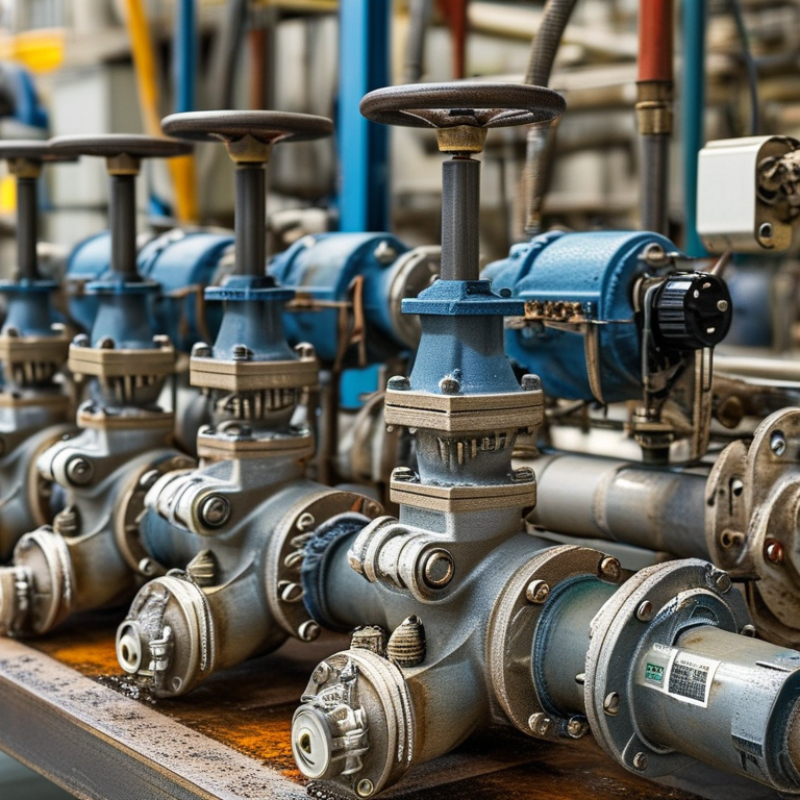
Pump quality begins with application fit, not appearance or price. Centrifugal pumps remain practical for clean water, cooling circuits, and irrigation. Their steady flow suits open systems. However, they can struggle with thick liquids or heavy solids.
Positive displacement pumps deliver controlled flow under higher pressure. They work well for oils, dosing fluids, and viscous materials. Diaphragm pumps handle chemically aggressive liquids when the wetted materials match the fluid. Submersible pumps are useful for drainage, construction pits, and wastewater handling. Multistage pumps support high-pressure systems, including tall buildings and process lines. Variable-speed drives can reduce energy use, but poor programming may create unstable pressure. Smart sensors help detect vibration, dry running, and seal problems. Yet, data cannot repair incorrect sizing.
Tips: Check viscosity, temperature, solids, pressure, flow, and power supply before ordering. Request performance curves and material certificates. Confirm local voltage and service availability. Leave room for maintenance access. A slightly oversized pump may waste energy, while an undersized model may run continuously. That mistake is common. No selection chart replaces a careful site review.
Global buyers should evaluate pump suppliers through measurable quality standards, not attractive catalogs. A reliable supplier should provide a certified quality management system, clear inspection procedures, and traceable production records. Material certificates must match the wetted components, including the casing, impeller, shaft, and seals. Ask for performance curves based on tested data, not estimates.
Factory acceptance testing should confirm flow, pressure, vibration, noise, and power consumption. Test results need serial numbers, calibrated instruments, and defined tolerances. Efficiency matters, but stable operation matters more in dusty plants, cold ports, and facilities with changing demand. Suppliers should explain corrosion protection, spare-part availability, installation support, and response times. These details often reveal operational experience.
A strong supplier also understands applicable regional standards and can provide complete technical files. Documents should include drawings, manuals, certificates, maintenance intervals, and packaging specifications. Check whether workers can explain the test process clearly. That small conversation can expose weak control systems. A polished certificate is not proof of consistent manufacturing. Site audits, sample inspections, and reference checks remain valuable.
No evaluation method is perfect. A supplier may meet every formal requirement yet struggle with communication after delivery. Buyers should record both strengths and concerns, including unclear promises or delayed answers. Transparent limitations are often more trustworthy than flawless claims. The best quality decision combines verified data, practical testing, and realistic lifecycle expectations.
Key quality standards for evaluating global pump suppliers
This standards-coverage map helps buyers identify the evidence required during supplier evaluation. A value of 1 means that the standard directly addresses the quality criterion; 0 means it is outside the standard’s primary scope. Supplier approval should combine these standards with test reports, inspection records, traceability documents, and verified operating data.
For global buyers, pump quality starts with material selection. Stainless steel resists corrosion in clean water and mildly aggressive fluids. Cast iron offers strong value for general water service. Duplex stainless steel suits chloride-rich or chemically demanding environments. However, material labels can mislead. Buyers should verify grade certificates, surface finish, and elastomer compatibility. A polished casing cannot compensate for the wrong seal.
Performance should be measured at the actual duty point, not only at maximum flow. The U.S. Department of Energy’s Pump System Assessment Tool indicates that system optimization can reduce pumping energy by 20–50% in suitable facilities. Oversized pumps often operate near throttled valves, creating heat, noise, and avoidable pressure loss. Check efficiency curves, minimum flow limits, suction conditions, and expected seasonal demand. Real installations are rarely perfect.
Energy efficiency also depends on the motor, controls, pipework, and maintenance. The International Energy Agency reports that electric motor systems consume about half of global electricity, making variable-speed control important where demand changes. A European Commission Joint Research Centre analysis also highlights the value of efficient motor-driven systems across industry. Yet, a variable-speed drive is not automatically efficient. Poor programming can increase cycling and reduce reliability. Buyers should request tested efficiency data, lifecycle energy estimates, and documented service intervals. I would still question any payback claim based only on laboratory conditions. Field measurements matter more.
2026 Best Quality Pumps for Global Buyers?
How to Select the Right Pump for Different Industries
Selecting a pump starts with the fluid, not the price. Water, oil, chemicals, and food liquids behave differently inside the system. Record the required flow rate, pressure, temperature, viscosity, and operating hours. A pump moving clean water may fail quickly when solids enter the line. I have seen this mistake create vibration, seal damage, and unexpected downtime.
Manufacturing plants often need corrosion-resistant materials and reliable mechanical seals. Mining operations require wear-resistant components for abrasive slurry. Food processors need hygienic surfaces, easy cleaning, and materials suitable for regulated contact. Agricultural systems usually prioritize stable flow, simple maintenance, and tolerance for outdoor conditions. Fire protection systems demand dependable pressure performance and verified safety requirements. Small details matter.
Check the pump curve carefully. The duty point should sit within an efficient operating range, not at the extreme edge. Oversizing can waste energy and cause frequent cycling. Undersizing may leave distant equipment without enough pressure. Consider motor efficiency, spare parts, installation space, and local service skills. Ask how the pump will behave during dry running or sudden blockage. A perfect selection is rare. In practice, one overlooked detail can change the result. Keep testing assumptions with actual site data, because catalog conditions may not match a hot, dusty, or unstable workplace.
2026 Best Quality Pumps for Global Buyers?
A reliable pump begins with correct duty data, not a glossy catalogue. Record flow, total head, fluid temperature, viscosity, solids content, voltage, and operating hours. Oversizing creates throttling losses and unstable operation. The U.S. Department of Energy reports that pumping systems may consume 25% to 50% of industrial facility electricity. Efficiency deserves serious attention. Ask suppliers for certified performance curves and test results under ISO 9906. Request the test grade, tolerance, and measurement conditions. A certificate without traceable records is weak evidence. I have seen projects fail because buyers checked motor power, but ignored suction conditions.
Certification depends on the destination and application. Confirm electrical, pressure, material, and environmental requirements before payment. For drinking-water service, verify material approvals accepted by the local authority. For hazardous locations, use the required conformity route and installation rules. Do not assume one certificate works everywhere. It often does not. The 2024 United Nations World Water Development Report highlights rising pressure on water systems, making dependable equipment and documented quality increasingly important.
Installation should include aligned pipework, adequate inlet protection, correct rotation, and accessible isolation valves. Keep suction lines short and avoid sudden diameter changes. During commissioning, record vibration, pressure, current, and flow at several load points. Maintenance plans should include seal inspection, bearing checks, lubrication control, and trend comparisons. A clean-looking pump can still be deteriorating. Global buyers should also evaluate spare-part availability, technical response time, language support, and local service capability. The cheapest purchase can become the most expensive lesson.
| Pump Category | Typical Flow Range | Typical Head or Pressure | Suitable Applications | Key Selection Factors | Relevant Standards or Certifications | Installation Considerations | Maintenance Priorities |
|---|---|---|---|---|---|---|---|
| End-Suction Centrifugal | Approximately 1–500 m³/h | Approximately 5–150 m | Water supply, HVAC, irrigation, general process service | Duty point, efficiency near the duty point, NPSH margin, material compatibility, motor voltage and frequency | ISO 2858 for selected dimensions; ISO 9906 for hydraulic performance testing; local electrical and pressure-equipment requirements | Use a rigid, level base; align pump and motor; install correctly sized suction piping; avoid air pockets and excessive elbows near the inlet | Check alignment, seals, bearings, vibration, leakage, coupling condition, and operating current |
| Multistage Centrifugal | Approximately 0.5–300 m³/h | Approximately 30–400 m | Booster systems, boiler feed, reverse-osmosis pre-treatment, high-rise water supply | Required pressure, stage count, water temperature, minimum flow, seal arrangement, control method | ISO 9906 performance testing; IEC 60034 requirements may apply to the motor; electrical conformity depends on destination market | Protect against dry running; provide adequate inlet pressure; install pressure relief and non-return protection where required | Inspect stage wear, mechanical seals, bearings, pressure fluctuations, start frequency, and minimum-flow protection |
| Positive-Displacement Screw or Gear | Approximately 0.1–250 m³/h | Approximately 2–250 bar | Viscous oils, lubricants, polymers, metering and transfer duties | Viscosity range, slip, relief-valve setting, shear sensitivity, material compatibility, maximum differential pressure | ISO 13709 or API 610 may apply to specific centrifugal process duties; process and pressure-system codes must be checked for the installation | Install a properly sized relief path; keep suction losses low; use strainers compatible with fluid viscosity; confirm rotation before operation | Monitor pressure, temperature, leakage, relief-valve operation, internal clearance, lubrication, and abnormal noise |
| Diaphragm Metering | Approximately 0.001–1,000 L/h | Approximately 5–400 bar | Chemical dosing, water treatment, disinfection and laboratory processes | Required dosing accuracy, chemical compatibility, pulsation, calibration range, back-pressure and dry-running tolerance | IEC 60534 may be relevant to control valves; electrical and chemical-handling requirements depend on the application and country | Use compatible tubing, injection fittings and check valves; provide back-pressure control and safe chemical containment | Inspect diaphragm, check valves, calibration, tubing, fittings, chemical crystallization and leakage |
| Submersible Drainage or Sewage | Approximately 5–2,000 m³/h | Approximately 5–100 m | Stormwater, construction drainage, wastewater and sewage transfer | Solids passage, clogging risk, wastewater composition, cable length, motor cooling, float or level-control method | IEC 60335-2-41 may apply to certain household pumps; ingress protection and local wastewater regulations must be verified | Use lifting equipment and a suitable guide system; protect cables from abrasion; verify grounding and level-control operation | Clean the intake, inspect impeller and seal chamber, test insulation resistance, check floats, cables and corrosion |
| Self-Priming Centrifugal | Approximately 2–400 m³/h | Approximately 5–100 m | Tank transfer, dewatering, wastewater and applications with intermittent air in the suction line | Priming time, suction lift, solids content, air handling, seal type and required dry-running protection | ISO 9906 may be used for hydraulic performance verification; local machinery, electrical and environmental rules also apply | Keep the casing filled according to the operating manual; minimize suction lift; use an appropriately sized foot valve when required | Check priming performance, casing condition, impeller clearance, seal leakage, suction line integrity and wear parts |
We are here to help you with all your queries and concerns, just write to us using the below form and we will get back to you as soon as we can.