
In today’s ever-evolving world, choosing the right Electric Water Heater is more crucial than ever. With countless options available, finding the perfect fit for your needs can feel overwhelming. Buyers seek efficiency, durability, and affordability, yet these are not always easy to find in one product.
Various brands and models compete for market attention. Some promise high efficiency, while others focus on smart technology features. However, not all lived up to their claims. It’s essential to research thoroughly. Review consumer feedback and expert opinions.
Relying solely on product descriptions can lead to disappointment. Real-life experiences often reveal strengths and weaknesses that specifications overlook. As you navigate the 2026 Electric Water Heater landscape, remember: even the best models may require adjustments or upgrades over time. Choose wisely.
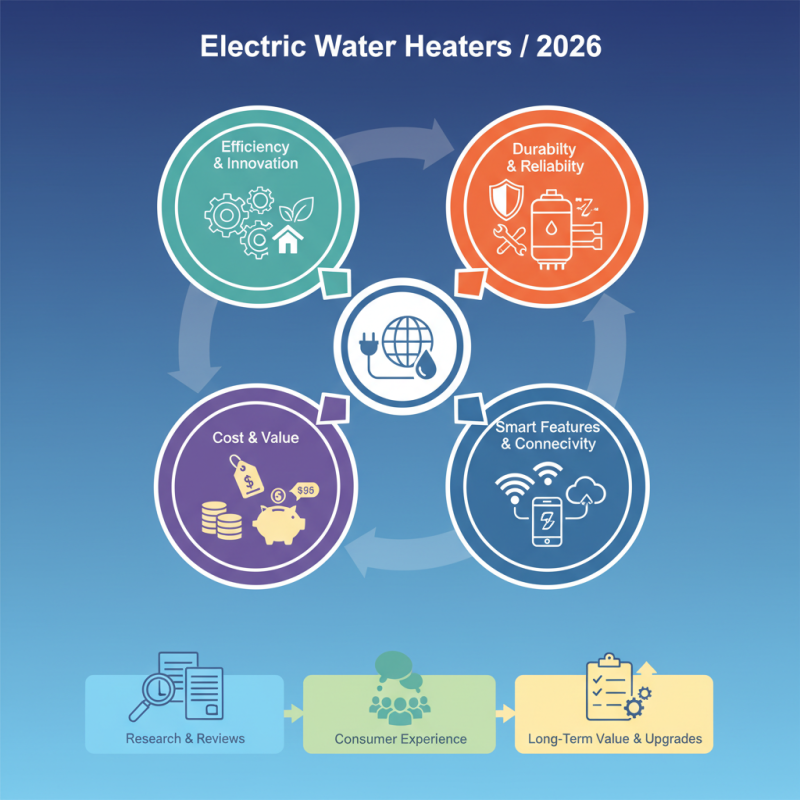
As we approach 2026, the landscape of electric water heaters is evolving. A focus on energy efficiency is now paramount. The global electric water heater market is projected to grow by 6% annually, influenced heavily by eco-conscious consumers seeking sustainable options. Understanding key features in electric water heaters is essential for making informed purchasing decisions.
One critical feature is insulation quality. High-quality insulation reduces heat loss. This improvement can lead to up to 20% energy savings. Moreover, smart technology integration is becoming vital. Many modern units allow remote monitoring. This can enhance user convenience and efficiency. However, potential buyers should exercise caution. Not all smart systems are user-friendly, which can complicate daily use.
Another aspect to consider is recovery rate. A unit with a higher recovery rate can provide hot water more quickly. However, these models may come with a higher upfront cost. Balancing initial investment with long-term savings is crucial. Industry reports indicate that consumers often overlook maintenance requirements. Regular upkeep can significantly extend the lifespan of an electric water heater. This often overlooked detail can result in headaches down the line.
| Option | Capacity (Gallons) | Energy Efficiency (EF) | Heating Time (Hours) | Price Range ($) |
|---|---|---|---|---|
| Model A | 50 | 0.95 | 1.5 | 800 - 1200 |
| Model B | 40 | 0.90 | 1.2 | 600 - 1000 |
| Model C | 80 | 0.97 | 2.0 | 900 - 1300 |
| Model D | 30 | 0.85 | 1.0 | 500 - 800 |
| Model E | 60 | 0.92 | 1.8 | 700 - 1100 |
When selecting an electric water heater, energy efficiency is critical for global buyers. The U.S. Department of Energy states that water heating accounts for about 18% of energy consumption in homes. Thus, understanding energy efficiency ratings becomes essential in minimizing both energy usage and costs.
The Energy Factor (EF) is a common metric for evaluating water heater efficiency. A higher EF indicates better efficiency. For example, models with an EF of 0.90 or above are favored. Reports suggest that switching to high-efficiency models can lead to energy savings of approximately 20-50%. This doesn't just lower bills; it also reduces carbon footprints.
Tips: Always verify the certification labels on water heaters. Look for ENERGY STAR ratings when possible. These models often meet strict efficiency guidelines. Consider your household's hot water needs too. Overly large tanks can waste energy by heating unused water. Balancing size and efficiency is key.
It's useful to reflect on the fact that not all electric water heaters offer the same energy savings. Differences in design and location can affect performance. For instance, insulated tanks retain heat better, but placement near usage points matters. Sometimes, assessing long-term costs against initial investments reveals surprising insights.
When selecting electric water heaters in 2026, buyers face numerous choices. Recent industry reports indicate a growing preference for energy-efficient models. These units not only reduce energy costs but also contribute to environmental sustainability. According to the Energy Information Administration, electric water heaters account for nearly 15% of household energy use, highlighting the importance of making an informed choice.
Major brands differ in their energy efficiency ratings. Some offer advanced insulation technology, which minimizes heat loss. This can lead to savings of up to 30% on energy bills compared to older models. However, not all brands provide adequate warranty support. Consumers should pay attention to customer service and repair options available after purchase. User reviews reveal that some brands fall short in this area, leading to frustrations.
Another key factor is the capacity. Many households overlook the size needed, which can lead to inadequate supply during peak usage times. The market offers various capacities, from compact units suitable for small apartments to larger models for families. Experts recommend evaluating immediate hot water needs before making a final decision. The lack of standardization in measurement can confuse potential buyers, emphasizing the importance of research.
When it comes to electric water heaters, proper installation and maintenance are crucial for optimal performance. Many homeowners underestimate the significance of professional installation. A study by the U.S. Department of Energy reveals that improper installation can decrease efficiency by up to 30%. This unnecessary energy waste highlights the importance of hiring skilled professionals who understand local codes and requirements.
Regular maintenance is equally essential to prolong the life of your electric water heater. Experts recommend flushing the tank at least once a year to remove sediment buildup. This sediment can reduce heating efficiency and cause potential damage over time. Additionally, checking the temperature setting is vital. The ideal temperature is around 120°F, balancing safety and efficiency. Higher settings can promote scalding and increase energy consumption.
Many users overlook the condition of the anode rod, an essential component. A worn-out anode rod can lead to corrosion inside the tank. Regular inspections can help identify issues before they escalate. While maintenance may seem tedious, addressing these elements prevents costly repairs and ensures a reliable hot water supply. Investing time in good practices pays off in the long run.
When considering electric water heaters in 2026, various budgets play a crucial role. A recent industry report from the International Energy Agency indicated that the global market for electric water heaters is expected to grow by 7% annually. This growth highlights the importance of selecting options that fit different financial situations.
For budget-conscious buyers, models priced under $400 often offer satisfactory performance. Many such units provide about 2.5 to 3 kW of heating power, suitable for small households. However, this might limit efficiency during peak usage times. On the other hand, mid-range options between $400 and $800 generally offer better energy efficiency. These units often feature advanced insulation, reducing heat loss. A study by the Department of Energy focused on this aspect, suggesting that well-insulated models could save homeowners approximately 15% on their energy bills.
High-end electric water heaters, often exceeding $800, come with advanced technologies, such as smart connectivity. These models are designed for larger families and provide quicker heating times. Nevertheless, the initial investment is significant. Buyers must weigh the long-term savings against upfront costs. This decision reflects a broader trend toward energy efficiency, which is increasingly essential in today’s market.
The chart above illustrates the cost analysis of different electric water heater models available in 2026. The prices range from budget-friendly options to premium models, catering to diverse buyer needs.
We are here to help you with all your queries and concerns, just write to us using the below form and we will get back to you as soon as we can.