
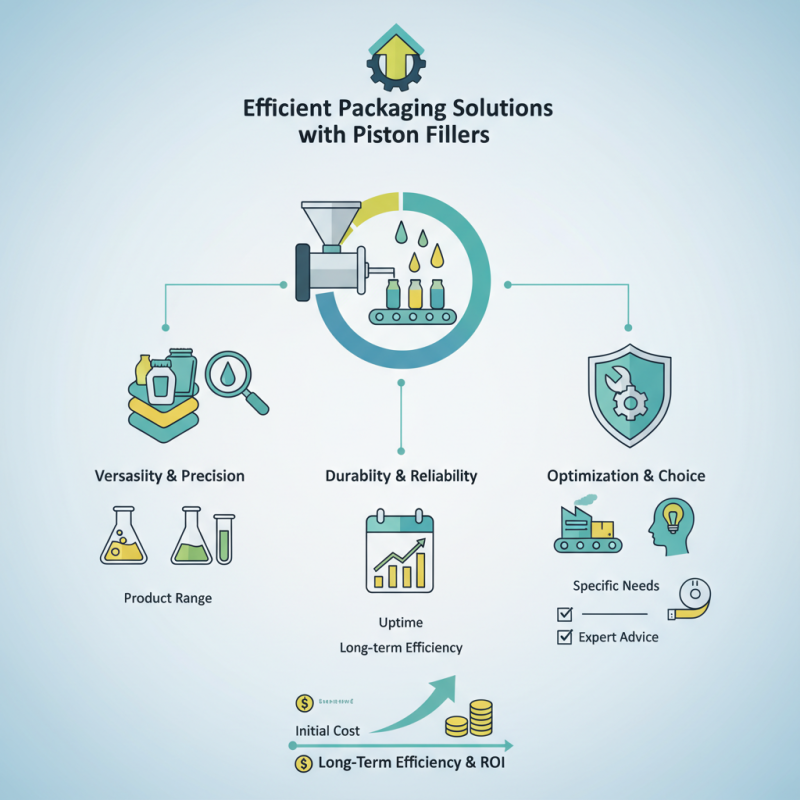
In the world of packaging, efficiency is key. The right equipment can make all the difference in productivity. Among various options, the Piston Filler stands out for its versatility and precision. This machine is designed to handle a wide range of products, from thick pastes to thin liquids. Its robust construction ensures durability, making it a reliable choice for many manufacturers.
Choosing the best Piston Filler for your operations can be challenging. Many factors influence your decision. The type of product, the desired fill accuracy, and the speed of operation are crucial. It's also important to consider how easy it is to clean and maintain. An efficient Piston Filler can streamline your packaging process and reduce downtime. However, it requires careful evaluation to match it with your specific needs.
Don't overlook the significance of expert advice. Industry professionals can guide you in selecting a Piston Filler that fits your requirements. They can also share tips on optimizing its use. Remember, investing in a high-quality Piston Filler is not just about the initial cost. It’s about long-term efficiency and reliability in your packaging operations.
Piston fillers are gaining momentum in the packaging industry. They offer precision, efficiency, and flexibility. According to industry reports, the global piston filling equipment market is projected to grow steadily, with a compound annual growth rate (CAGR) of 4.5% from 2022 to 2028. This growth signals a broader shift toward automated solutions in packaging.
Recent trends indicate a move toward smart technology integration. Modern piston fillers are now equipped with IoT capabilities. These additions allow for real-time monitoring and data analytics. Companies can optimize operations and minimize waste. However, not all manufacturers adopt these technologies effectively. Some still rely on outdated processes, risking efficiency losses.
Additionally, sustainability is becoming a significant concern. The industry is exploring eco-friendly materials and energy-efficient machines. Approximately 35% of firms are investing in sustainable practices. Yet, many struggle to balance costs with environmental goals. This challenge reveals an ongoing need for innovative solutions in piston filling systems. As the landscape evolves, manufacturers must embrace change to stay competitive.
This chart illustrates the predicted trends for piston fillers in 2026, highlighting key areas such as speed, accuracy, ease of cleaning, cost efficiency, and customization flexibility.
When choosing a piston filler for efficient packaging, key features matter greatly. Look for precision in filling; inconsistency can lead to product waste. Piston fillers should provide adjustable fill volumes for varied product types. This flexibility allows smoother operations in dynamic production environments.
Tip: Ensure that the filler has easy-to-clean components. Hygiene is crucial, especially for food and cosmetic industries. Regular maintenance prevents cross-contamination.
Another essential feature is speed. Quick adjustments can significantly enhance productivity. A filler that operates smoothly minimizes downtime. Evaluate the filler’s throughput while considering the type of product you plan to package.
Tip: Opt for models with user-friendly interfaces. Complex systems can lead to operator error and inefficiencies. Simplicity facilitates faster training and reduces mistakes. Regularly inspect your equipment for wear and tear. This practice ensures longevity but also highlights areas needing improvement.
In 2026, the demand for efficient piston fillers continues to grow across various industries. A recent report from the Global Packaging Research Group indicates a 15% increase in the market for piston filling machines due to rising consumer expectations for precision and speed. These machines handle a wide range of products, from thick creams to thin liquids, providing essential versatility in packaging processes.
Several leading manufacturers are now incorporating advanced technology into their piston fillers. For instance, pneumatic systems have shown a 20% improvement in fill accuracy compared to traditional models. However, the implementation of these technologies requires careful consideration. Challenges such as maintenance, calibration, and initial investment remain prevalent in the industry. Even top-performing piston fillers are criticized for their learning curve, particularly in settings with inexperienced operators.
Efficiency is vital, but it comes with a price. Some reports highlight that companies may face hidden costs from downtime during maintenance. The goal is to achieve a balance between efficiency and reliability. Continuous training for operators can mitigate mistakes. Regular maintenance schedules help avoid unexpected failures. Addressing these issues ensures that the benefits of advanced piston fillers are fully realized in packaging lines.
| Model | Filling Capacity (ml) | Filling Speed (Bottles/min) | Accuracy (%) | Price Range (USD) |
|---|---|---|---|---|
| Model A | 100 - 500 | 30 | ±1% | $5,000 - $7,000 |
| Model B | 200 - 1000 | 50 | ±0.5% | $8,000 - $10,000 |
| Model C | 150 - 600 | 40 | ±1% | $6,000 - $9,000 |
| Model D | 250 - 1200 | 60 | ±0.3% | $10,500 - $12,500 |
| Model E | 100 - 300 | 20 | ±2% | $4,000 - $6,000 |
Piston fillers play a pivotal role in various industries, particularly in packaging applications. These machines are designed to handle a wide range of liquids and semi-solids. They offer precise filling capabilities, making them essential for industries such as food and beverage, pharmaceuticals, and personal care. For example, a piston filler can efficiently package sauces, creams, and even viscous gels, ensuring that each container is filled accurately.
In the food industry, the efficiency of piston fillers can lead to reduced waste and higher productivity. They can adapt to different fill volumes, allowing for flexibility in production runs. This adaptability can sometimes cause challenges; incorrect settings can lead to overfilling or underfilling, which affects both customer satisfaction and regulatory compliance. Furthermore, cleanliness is vital. Ensuring that these machines are thoroughly cleaned after each use can be time-consuming but is essential to maintaining product integrity.
In pharmaceuticals, precise dosage is critical. Piston fillers must meet stringent hygienic standards. The risk of contamination is always present if the equipment is not properly maintained. Regular training for operators can mitigate these issues. They should understand the machine's intricacies. Without proper knowledge, even the best equipment can underperform and lead to costly errors.
Piston fillers remain a cornerstone of efficient packaging in various industries due to their precision and adaptability. Recent data from industry reports highlight that modern piston fillers can reduce product wastage by up to 15%, significantly improving overall cost-efficiency. These machines precisely control the volume of liquids, semi-liquids, or pastes, which decreases overfilling and ensures consistent product quality. This accuracy directly impacts the return on investment (ROI), as it lowers raw material expenses and enhances production throughput.
Cost-effectiveness goes beyond the initial purchase price. Maintenance costs and downtime play crucial roles in long-term profitability. Reports indicate that piston fillers with modular components reduce repair time by nearly 30%, a critical factor often underestimated. However, some systems still require frequent calibration, which can interrupt operations. Users must weigh these trade-offs while considering their production scale and product type. Not every machine suits every need, signaling the necessity for careful evaluation.
Incorporating piston fillers into packaging lines leads to better labor optimization and reduced human error. Automation levels vary, but even semi-automated systems offer measurable efficiency gains. The investment pays off faster in high-volume settings where small percentage savings multiply. However, rapid technology changes mean equipment investment could feel outdated sooner than expected. Continuous updates in filler technology suggest a cautious approach to choosing machinery, balancing innovation with proven reliability.
We are here to help you with all your queries and concerns, just write to us using the below form and we will get back to you as soon as we can.