

-

97 Auto Road, County of Vermilion River, AB T0B 0L0
-

-

97 Auto Road, County of Vermilion River, AB T0B 0L0

Choosing the best Electric Shock Collar alternative from China requires more than comparing prices, range, or packaging. Buyers should examine training methods, product safety, battery reliability, waterproof ratings, and after-sales support. A low-cost device may look impressive online, yet weak instructions or unstable stimulation controls can create serious welfare concerns. Product claims deserve careful checking.
Dr. Zazie Todd, an animal behavior writer and reward-based training expert, states, “Reward-based training is more effective, and more humane, than punishment-based training.” Her view reflects current behavior science and supports alternatives such as clicker training, long lines, GPS trackers, whistle systems, and reward-based remote trainers. These tools can help owners build recall without relying on painful corrections. A GPS tracker can show a dog’s location, but it cannot replace supervision or secure fencing.
Real-world details matter. A good alternative should survive wet grass, muddy walks, and repeated charging. Controls should remain clear when an owner wears gloves. The collar must fit comfortably and allow two fingers beneath the strap. Even vibration-only products are not automatically harmless; some dogs may find them startling or confusing.
This guide will compare China-made alternatives through a practical buyer’s lens. It will consider training effectiveness, comfort, durability, transparency, and customer service. Some conclusions may remain uncertain because manufacturers often provide limited testing data. That limitation matters. The cheapest option is not always the safest, and the most advanced device may still fail without patient training.
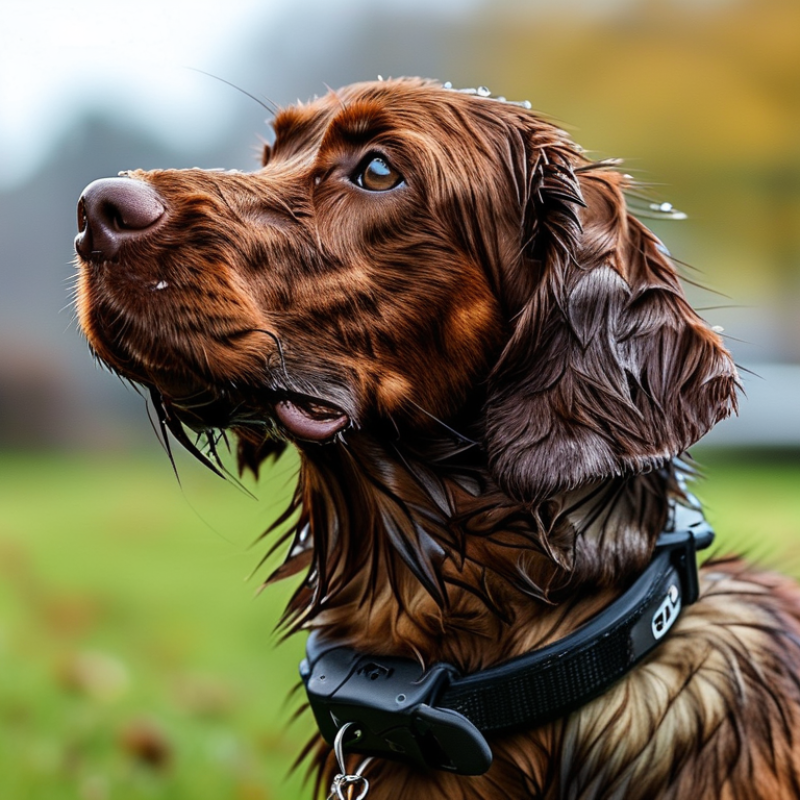
Electric Shock Collar alternatives rely on communication, management, and reward rather than pain. Reward-based training uses food, play, or affection after a desired action. A clicker or short marker word identifies the correct moment. A front-clip harness can reduce pulling, while a long line gives recall practice without losing control. Visual targets and hand signals also help dogs in noisy parks.
These methods have professional support. A peer-reviewed study of 63 pet dogs found reward-focused training produced faster responses and fewer stress-related behaviors than remote electronic training. A review in the Journal of Veterinary Behavior examined 17 studies and linked aversive methods with more fear, stress, and possible aggression. The American Veterinary Society of Animal Behavior also recommends reward-based training for routine behavior change.
In practical use, timing matters more than expensive equipment. Give the reward within two seconds. Keep sessions short, perhaps five minutes beside a kitchen chair. A long line can stop a dog rehearsing unsafe chasing. Food may fail near squirrels, however. That is where distance, better rewards, and gradual practice matter. Some owners expect instant recall, and that expectation needs challenging. Different dogs learn at different speeds. A harness can also fit poorly, rub the chest, or encourage pulling when used carelessly. Regular checks remain necessary.
| Alternative | How It Works | Primary Training Use | Typical Effective Range | Potential Advantages | Limitations | Welfare Considerations | Overall Suitability |
|---|---|---|---|---|---|---|---|
| Voice or Verbal Cue | Uses a consistent spoken word, such as “come,” “leave it,” or “quiet,” followed by a reward when the dog responds correctly. | Recall, basic obedience, impulse control, and interruption of unwanted behavior. | Usually limited by the handler’s voice volume, environmental noise, and the dog’s distance. | Requires no equipment, costs little, and can strengthen communication between the dog and handler. | May be ineffective in heavy traffic, strong wind, or highly distracting environments unless trained gradually. | Use a calm, consistent tone. Avoid repeated shouting, which can reduce cue clarity and increase stress. | High for foundation training |
| Whistle Cue | Produces a distinct sound that can be paired with a behavior and reward during structured training. | Long-distance recall, field work, and emergency attention cues. | Often farther than the human voice, depending on the whistle, wind, terrain, and hearing ability of the dog. | Consistent sound, low physical effort, and useful over longer distances. | Requires conditioning; some dogs may ignore it until it has been associated with reinforcement. | Use an appropriate volume and avoid blowing at close range near the dog’s ears. | High for trained recall |
| Audible Tone Collar | Emits a non-electrical beep or tone that serves as an attention signal or trained cue. | Attention, recall preparation, boundary awareness, and cue delivery when the handler’s voice is difficult to hear. | Commonly limited by the device’s speaker output, obstacles, wind, and the dog’s hearing. | Can provide a consistent signal without applying an electrical stimulus. | The sound alone does not teach a behavior; it must be paired with training and reinforcement. | Use the lowest clearly audible volume and discontinue use if the dog shows fear, avoidance, or sound sensitivity. | Moderate to high |
| Vibration Collar | Uses a mechanical vibration as an attention signal. It does not deliver an electrical shock, but the sensation may still be startling to some dogs. | Attention, recall cues, and communication with dogs that cannot reliably hear a voice cue. | Typically restricted by remote-control signal distance, body position, obstacles, and battery condition. | Can be felt in noisy settings and may provide a tactile cue when used carefully. | Some dogs become anxious or desensitized; it is not automatically positive or harmless for every animal. | Introduce gradually at the lowest effective setting and pair with rewards. Do not use it to punish fear, aggression, or pain-related behavior. | Moderate; individual response varies |
| Reward-Based Training | Reinforces desired behavior with food, play, praise, access to preferred activities, or other suitable rewards. | Obedience, recall, loose-leash walking, cooperative care, and behavior modification. | Not dependent on a device; effectiveness depends on training history, timing, motivation, and distractions. | Builds predictable behavior and can improve the dog–handler relationship when applied consistently. | Requires planning, repetition, accurate timing, and appropriate management of the environment. | Use rewards that are safe for the individual dog and avoid withholding essential needs as a training method. | High for most training goals |
| Long Line and Harness | Provides physical management and allows controlled freedom while the dog learns recall or boundary skills. | Recall practice, outdoor exploration, decompression walks, and prevention of unsafe wandering. | Determined by the length of the line and the handler’s ability to manage it safely. | Offers immediate management without relying on pain or startling sensations. | Can tangle, create a trip hazard, or cause injury if attached to unsuitable equipment or used carelessly. | Use a well-fitted harness, inspect equipment regularly, and avoid wrapping the line around people, trees, or the dog. | High for supervised practice |
| Physical or Visual Boundary | Uses fencing, gates, secure enclosures, or clearly managed access points to prevent unwanted movement. | Yard safety, restricted-area management, and prevention of roaming. | Defined by the physical boundary rather than a remote signal. | Reduces reliance on correcting the dog after it has already crossed a boundary. | Installation may require space, maintenance, and compliance with local property or housing rules. | Check for escape gaps, sharp edges, overheating risks, and adequate shelter, water, and supervision. | High for prevention and safety |
| Scent-Based Deterrent | Uses an odor that many dogs find unpleasant to discourage approach to a specific object or area. | Limited object or area avoidance, such as discouraging access to selected garden or household zones. | Usually limited to the treated area and affected by rain, wind, cleaning, and the dog’s individual sensitivity. | Can be useful for temporary, localized management when combined with an alternative behavior. | Effectiveness is inconsistent; some dogs may ignore the odor, and repeated application may be necessary. | Use only substances labeled as safe for the intended animal and environment. Never use toxic, caustic, or irritating chemicals. | Low to moderate; situational |
| Ultrasonic Sound Device | Emits a high-frequency sound intended to interrupt attention or discourage a behavior. | Short-range attention interruption or limited nuisance-behavior management. | Short to moderate range, affected by direction, obstacles, background noise, and the dog’s hearing. | Non-contact and easy to carry for some specific situations. | Response varies considerably; it may startle or distress dogs and does not teach a replacement behavior. | Use cautiously, never aim near the ears at close range, and stop if the dog shows anxiety, hiding, freezing, or avoidance. | Low to moderate; use cautiously |
| Spray-Based Deterrent Collar | Releases a spray, commonly designed as an interruption stimulus, when a selected behavior is detected or triggered. | Some owners use it for barking interruption, although behavior-specific assessment and training are preferable. | Limited by sensor accuracy, cartridge capacity, wind, and the dog’s proximity to the device. | Does not use electrical stimulation and may interrupt behavior without direct physical contact. | May be startling, can misfire, and may suppress communication without addressing fear, boredom, pain, or environmental triggers. | Avoid sprays near the eyes, nose, or mouth. Do not use as a substitute for veterinary or qualified behavior support. | Low to moderate; behavior-dependent |
| Professional Behavior Support | A qualified trainer or veterinary behavior professional assesses the cause of the behavior and creates an individualized plan. | Fear, aggression, separation-related problems, compulsive behavior, severe reactivity, and complex recall issues. | Not device-dependent; progress depends on the dog, diagnosis, environment, and consistency of the plan. | Can identify medical, emotional, and environmental factors that equipment alone cannot address. | Requires time, cost, and careful selection of a suitably qualified professional. | Seek veterinary assessment for sudden or severe behavior changes, suspected pain, or aggression risk. | High for complex cases |