
Choosing a Water Spray Gun supplier involves more than comparing prices or product photos. Global buyers often need consistent spray patterns, durable seals, reliable connections, and clear technical documentation. A gun that performs well during a brief sample test may behave differently after repeated use. Details matter.
This guide introduces ten China-based manufacturers for buyers researching agricultural, garden, cleaning, and industrial applications. It considers practical factors such as product range, customization options, materials, quality controls, export support, and communication. For example, buyers can ask whether a nozzle adjusts from a fine mist to a focused stream, and whether replacement parts are available. These questions help turn a broad supplier search into a more useful shortlist.
No ranking can replace a buyer’s own checks. Supplier capabilities may vary by model, order size, and production schedule, so confirm specifications directly before making a decision. Request current product sheets, sample units, and clear information about inspection procedures. A polished catalog is not proof. That distinction is easy to miss.
The manufacturers featured here offer a starting point, not a guarantee of fit. Compare their answers against your operating conditions, target market, and service expectations. If a specification is unclear, ask again. A little extra scrutiny can prevent mismatched connections, uneven spray coverage, or avoidable delays after an order arrives.
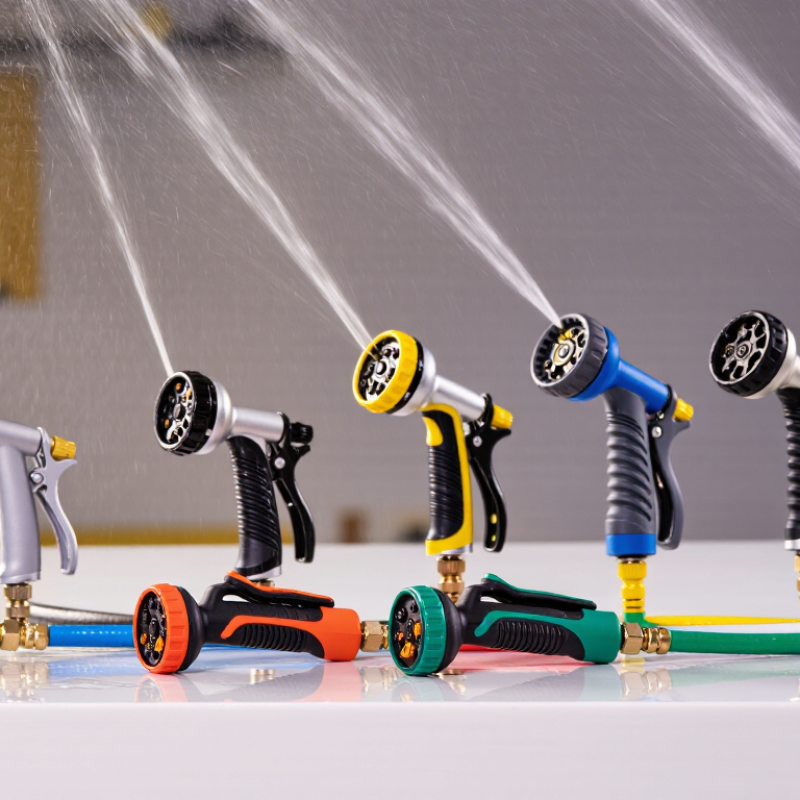
Water spray guns vary in control, reach, and water output. Trigger-operated models suit quick rinsing, while adjustable nozzles shift from a narrow jet to a wider fan. A soft shower can protect seedlings; a concentrated stream may remove mud from tools or outdoor surfaces. The spray pattern matters as much as pressure. Too forceful a jet can damage delicate leaves or push dirt into crevices.
Common components include the gun body, trigger, valve, nozzle, handle, and hose connector. Internal seals help control leaks, while nozzle materials affect wear and corrosion resistance. Small details matter. A comfortable grip is useful during repeated tasks, but it cannot compensate for a poor-fitting connector. Applications range from garden watering and vehicle rinsing to workshop cleanup and light agricultural use. Before choosing a model, check its compatible water pressure, connection size, and intended duty cycle. A spray pattern that looks even during a short test may change with different supply pressure, so real-use checks are worthwhile. In practice, the best setting is not always obvious. It may take adjustment.
For global buyers, assessing a water spray gun manufacturer takes more than comparing prices and product photos. Request clear specifications for materials, working pressure, flow rate, nozzle settings, and connection sizes. Ask how each model is tested for leaks and spray consistency. Ask for evidence. A short test video or inspection record can help clarify what a catalogue cannot. Small details matter.
Review production capacity, quality checks, sample availability, and realistic lead times. If possible, test samples with your own hose and water supply. Check whether the trigger feels firm, the seal stays dry, and spray patterns remain stable after repeated use. Discuss packaging and replacement parts, too. A polished sample is useful, but it may not represent every production batch. Verify that quality procedures are documented, and ask how defects are handled. Do not rush.
Tips: Send the same written checklist to each supplier. Compare answers, sample performance, and response time—not just the quoted price. Keep notes; one overlooked fitting size can delay a shipment.
The ten profiles show different strengths among Chinese water spray gun manufacturers, without relying on brand names. One specializes in garden nozzles, with twist-adjustable spray patterns for watering beds. Another focuses on trigger sprayers, where grip shape and smooth return matter during repeated use. A third makes metal-bodied guns for tougher cleaning tasks. A fourth offers lightweight plastic models for household use. A fifth concentrates on agricultural sprayers, with fittings designed for longer hoses. Practical details matter. A sixth supplier produces high-pressure wash guns, where seal quality and tested working pressure deserve close review.
A seventh manufacturer emphasizes interchangeable tips and accessories. An eighth focuses on compact designs that fit retail packaging. A ninth combines machining and assembly in-house, which can help with dimensional consistency. The tenth offers made-to-order configurations for buyers with specific connection or color requirements. These descriptions are profile types, not verified rankings; buyers should confirm each supplier’s actual production scope. Requesting samples can reveal issues a catalog misses, such as a stiff trigger or uneven spray. That step takes time. It is still worthwhile. Specifications, inspection records, and clear communication provide firmer evidence than broad claims about quality or capacity.
Pressure Unit Conversion Reference for Global Buyers
This chart converts bar to pounds per square inch (psi) using 1 bar ≈ 14.5038 psi. It is a unit-conversion reference, not a specification or ranking of any manufacturer’s products. Check each product’s stated operating-pressure range before purchase.
For global buyers, comparing water spray gun manufacturers means looking beyond catalog size. A useful range may include trigger guns, adjustable-nozzle models, and options for different hose connections. Check whether the spray pattern shifts cleanly from a fine mist to a firm stream. Small details matter. A stiff trigger becomes tiring during repeated use, while a loose connector can leave water on the workshop floor.
Quality is easier to judge with clear specifications and repeatable testing. Ask about materials, pressure limits, leak checks, and how products are inspected before shipment. Request samples when possible, then test them with the intended water pressure and hose setup. A polished brochure is not proof. Performance can vary between batches, so buyers should ask how production consistency is monitored and what inspection records are available.
Production capability also affects delivery and customization. Compare stated output with actual lead times, minimum order quantities, packaging choices, and the ability to handle seasonal demand. A large factory is not automatically the best fit; communication and stable quality matter too. Some details may remain unclear until samples arrive, and that is worth acknowledging. Buyers should document requirements in writing, especially for nozzle behavior, connection dimensions, and packaging, before approving a larger order.
Buyer comparison guide: No company names or supplier-specific rankings are shown. The entries below represent common water spray gun product segments, not verified profiles of individual manufacturers. Confirm each supplier’s actual product range, quality controls, and production capacity through documentation, samples, and an audit.
| No. | Product Segment to Compare | Typical Product Range | Quality Checks for Buyers | Production Capabilities to Verify | Useful for |
|---|---|---|---|---|---|
| 01 | Adjustable garden hose spray guns | Handheld guns with selectable spray patterns, such as mist, shower, jet, and cone | Check trigger operation, pattern consistency, grip comfort, and leakage under operating pressure | Confirm available patterns, handle and body materials, assembly capacity, and functional test procedures | Garden watering and general outdoor cleaning |
| 02 | Multi-pattern watering nozzles | Hose-end nozzles with a rotating head or selector for multiple spray settings | Inspect selector alignment, detents, seal performance, and repeatable pattern changes | Ask about selector-component sourcing, assembly checks, and options for private-label packaging | Retail garden ranges requiring several spray settings in one product |
| 03 | High-pressure hose nozzles | Focused jet or adjustable nozzles intended for stronger water streams from a connected hose | Verify pressure limits, connection fit, leakage resistance, and safe-use instructions | Request documented pressure-test conditions and confirmation that product claims match test results | Outdoor rinsing and general-purpose washdown |
| 04 | Heavy-duty metal-bodied spray guns | Spray guns with metal body or structural components and hose connections | Check corrosion protection, thread quality, trigger durability, and seal compatibility | Verify material specifications, surface-finishing controls, machining or casting processes, and inspection records | Buyers prioritizing a more robust construction |
| 05 | Lightweight plastic spray guns | Handheld hose guns using molded plastic components, often with ergonomic grips | Assess molding consistency, joint fit, trigger return, and resistance to cracking in intended use | Confirm molding capacity, resin specifications, color options, and controls for batch consistency | Cost-conscious consumer products and lighter-duty watering |
| 06 | Shut-off and flow-control nozzles | Nozzles with an integrated valve or control intended to regulate or stop water flow | Test shut-off function, valve leakage, control smoothness, and connection-seal performance | Ask how valve components are assembled and whether every unit or a defined sample is leak-tested | Applications where convenient flow control at the nozzle is useful |
| 07 | Foam and soap-dispensing spray guns | Hose-connected sprayers with a detergent reservoir or soap-dispensing attachment | Check reservoir sealing, dispensing consistency, material compatibility, and cleaning instructions | Verify available reservoir sizes, detergent compatibility guidance, and functional-test coverage | Vehicle, patio, and equipment cleaning with compatible cleaning products |
| 08 | Long-reach watering wands | Extended-reach wand-style sprayers, sometimes with an adjustable head or trigger control | Inspect wand rigidity, head adjustment, trigger action, and joints for leakage | Confirm length options, joining methods, packaging dimensions, and inspection of assembled products | Reaching hanging baskets, raised beds, or plants farther from the user |
| 09 | Compact and ergonomic spray guns | Smaller or grip-focused designs intended for one-handed operation | Evaluate grip comfort, trigger force, control accessibility, and performance across intended spray settings | Request product drawings, sample evaluation, and evidence of design-change and production controls | Consumer ranges where size, handling, and ease of use are priorities |
| 10 | OEM and private-label spray gun programs | Customer-specified combinations of spray patterns, colors, packaging, and product markings | Approve a production sample and check that materials, performance, labeling, and packaging match the specification | Verify customization scope, minimum order quantities, tooling responsibility, lead times, and change-control procedures | Importers and retailers developing a buyer-specific product range |
For global buyers, export readiness begins with clear product specifications. A water spray gun’s working pressure, flow rate, inlet thread, and material should match the intended hose and water supply. Ask for drawings, sample units, and test records tied to the exact model. A catalog photo cannot confirm whether a connector fits your equipment.
Check the documents before placing a large order. Confirm commercial invoices, packing lists, country-of-origin details, and product descriptions with your customs broker or import adviser. Requirements vary by destination and sales channel, so avoid relying on a supplier’s general assurance alone. Request evidence for any safety, material, or performance claims that matter in your market. Keep it on file.
Inspect samples under realistic conditions. Check the trigger response, spray-pattern consistency, seals, and packaging after handling. Small details matter. Clarify acceptable defect rates, replacement terms, lead times, and how changes to materials or tooling will be communicated. One awkward gap often remains: buyers may approve a sample without checking whether bulk production matches it. A written specification and pre-shipment inspection can reduce that risk, though neither removes every uncertainty.
We are here to help you with all your queries and concerns, just write to us using the below form and we will get back to you as soon as we can.