How to Choose the Best Water Pump for Your Needs?
Choosing the right water pump can be daunting. With various options available, each suited for different needs, one size does not fit all. A water pump plays a crucial role in both residential and industrial settings. Its correct selection can lead to efficiency and cost savings.
For homes, factors like size, power, and intended use determine the best water pump. Is it for irrigation, draining, or supplying? Each use influences the type of pump needed. Moreover, understanding the water source and required flow rate is vital. Different pumps offer varying capabilities, and overlooking these can result in poor performance.
Even experienced users may face challenges. Some may prioritize price over quality, risking long-term reliability. It’s essential to balance budget with durability. Consulting with experts can provide valuable insights, but personal research is equally important. By carefully analyzing your specific requirements, you can select the most suitable water pump for your needs.
Understanding Different Types of Water Pumps Available in the Market
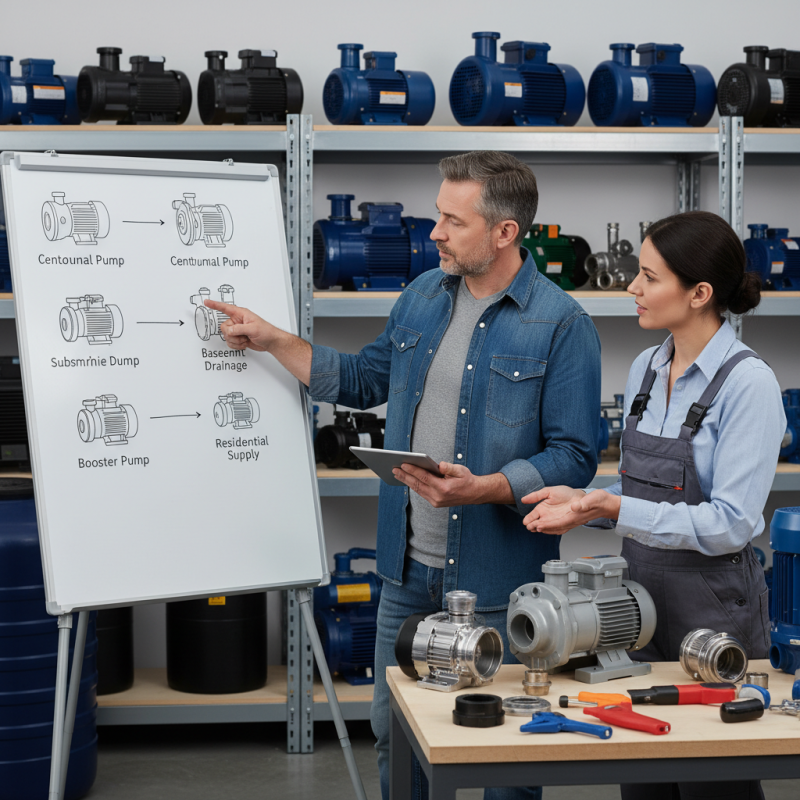
When selecting a water pump, it’s essential to understand the different types available. The main categories include submersible, centrifugal, and positive displacement pumps. Each type serves distinct purposes and functions in various applications.
Submersible pumps are designed for underwater use. They are effective for draining wells and ponds. Centrifugal pumps, on the other hand, utilize rotational energy for fluid movement, making them ideal for irrigation and water transfer.
Positive displacement pumps operate by trapping a fixed amount of water and forcing it through the discharge. This type excels in high-viscosity applications. It’s important to determine your specific needs before making a choice. Consider factors like flow rate and head height. Not all pumps suit every situation. For instance, a pump suitable for garden use might not work effectively in industrial settings.
Choosing the right pump requires careful consideration. Think about the power source and maintenance needs. Some pumps demand more upkeep than others. Often, users overlook noise levels, which can be significant. A noisy pump can disrupt your daily activities. Taking this into account will help you find a reliable solution that meets your water movement needs effectively.
Assessing Your Specific Water Pump Needs and Requirements
When selecting a water pump, understanding your specific needs is crucial. Start by assessing the water source. Is it from a well, pond, or municipal supply? The water's characteristics play a significant role. For example, water with a high sediment level may require a pump with a filter system. According to industry reports, around 30% of users experience pump failure due to inadequate filtering.
Next, evaluate the required flow rate and pressure. Determine how much water you need and the height it should be pumped. The average household might need between 5 to 20 gallons per minute, depending on the application. In agricultural settings, this demand can spike dramatically—up to 100 gallons per minute for irrigation systems. Studies show that selecting a pump with the correct specifications can improve efficiency by up to 25%.
Also, think about the environment where the pump will operate. Is it indoors or outdoors? Will it be exposed to extreme weather? Pumps in harsh conditions may need additional protective features. It's also worth noting that ongoing maintenance is often overlooked. Regular checks can extend a pump’s lifespan significantly. Reflecting on all these unique demands can guide you in making an informed purchase decision.
Key Features to Consider When Selecting a Water Pump
Selecting the right water pump can seem daunting. However, focusing on key features can simplify the process. Begin with flow rate and pressure. The flow rate indicates how much water a pump can move in a specific time. Research shows that pumps with a flow rate of at least 10 gallons per minute are effective for standard household applications.
Next, consider the pump's power source. Electric pumps are common but may require access to an outlet. Gas-powered models offer portability but come with maintenance challenges. Another factor is the pump’s material. High-quality materials like cast iron or stainless steel are more durable. A report by the Water Pump Manufacturers Association notes that pumps made from these materials can last for years under proper use.
Also, noise level is an important aspect often overlooked. Some pumps can be disturbingly loud, especially during continuous operation. It’s essential to check decibel ratings. Evaluating these features might require some extra time, but it leads to a wiser investment. Balancing performance, durability, and usability remains crucial for your water pump selection.
Key Features to Consider When Selecting a Water Pump
Evaluating Energy Efficiency and Operating Costs of Water Pumps
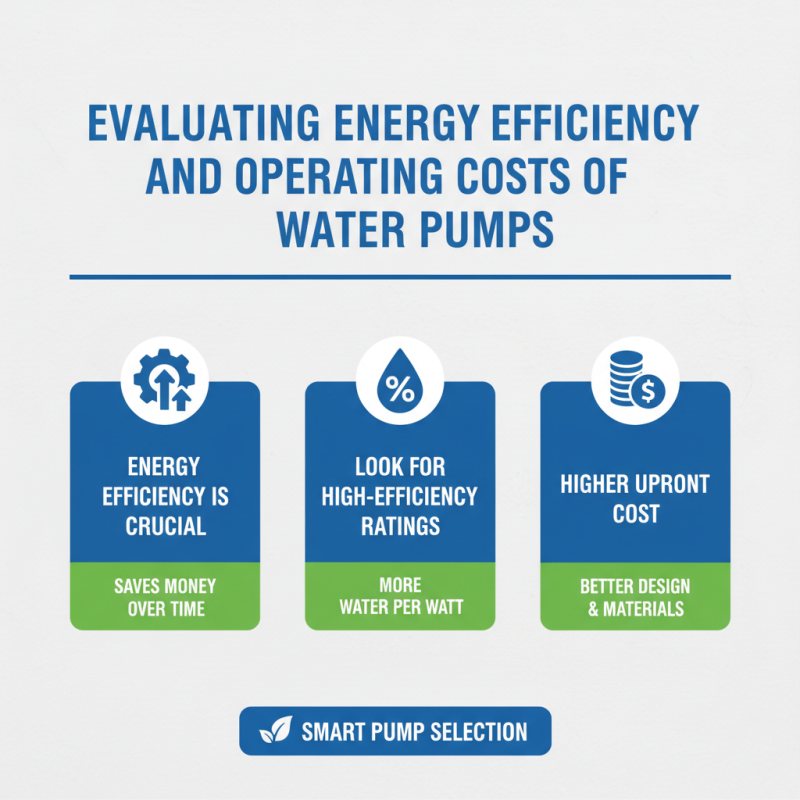
When selecting a water pump, energy efficiency is crucial. A pump that consumes less energy saves you money over time. Look for pumps with high-efficiency ratings. These ratings can indicate how much energy is used relative to the water pumped. Often, more efficient pumps have better designs and materials. However, these may come with a higher upfront cost.
Operating costs should also be considered. These costs include electricity usage and maintenance. Some pumps require frequent repairs, while others are more reliable. Regular checks and maintenance can prolong a pump's lifespan, though they may not always be budget-friendly. Balancing initial costs with long-term savings is essential.
Keep in mind that not all pumps fit every situation. Sometimes, extra features are unnecessary. Reflect on your specific needs. Choose a pump that meets those needs without excessive features. This prevents wasted money and resources. Efficiency is not just about the pump itself but also about how you will use it.
Reading Reviews and Ratings to Make an Informed Decision
When choosing a water pump, reviews and ratings play a crucial role. A recent survey showed that 78% of consumers rely on user reviews before making a purchase. This statistic emphasizes the importance of trusted feedback. To find the best water pump, look for detailed reviews that highlight user experiences. They can reveal strengths and weaknesses that specifications alone may not show.
Expert evaluations are also vital. Studies indicate that independent testing bodies often provide more reliable data. They assess performance, durability, and efficiency. For instance, a 2022 report found that pumps with high energy efficiency ratings reduce long-term costs considerably. In addition, rating aggregators can help summarize opinions quickly. Check overall scores, but also read individual reviews to capture diverse perspectives.
While ratings offer valuable insights, it's important to reflect on their context. A highly rated product may excel in specific applications but fall short elsewhere. Look for comments on longevity and maintenance needs. Analyze if the prevalent issues raised align with your intended use. Understanding these nuances can help avoid pitfalls and align your choice with real-world applications.
How to Choose the Best Water Pump for Your Needs?
| Pump Type |
Flow Rate (GPM) |
Max Head (Feet) |
Power Source |
Rating (out of 5) |
Price (USD) |
| Submersible Pump |
50 |
30 |
Electric |
4.5 |
$150 |
| Jet Pump |
60 |
45 |
Electric |
4.0 |
$200 |
| Solar Water Pump |
30 |
25 |
Solar |
4.7 |
$300 |
| diaphragm Pump |
40 |
20 |
Electric |
4.3 |
$250 |