
How to Choose the Best Turning Rotating Table for Your Needs?

Choosing the right Turning Rotating Table can be challenging. With numerous options available, it’s easy to feel overwhelmed. Dr. Emily Carter, an industry expert in rotary motion systems, states, "A perfect turning rotating table must blend efficiency with precision for optimal results." Her insight highlights the importance of aligning your needs with the product features.

When selecting a turning rotating table, consider your specific applications. For instance, whether it's for woodworking, metalworking, or robotics, each field has distinct requirements. Not all tables offer the same level of stability, speed, or torque. It’s crucial to assess these factors carefully to avoid potential frustrations down the line.

Additionally, reflect on the size and capacity of the turning rotating table. A table that’s too small may limit your projects, while an oversized one can take up unnecessary space. Make a list of your priorities before making a decision. This thoughtful approach helps ensure that you select a table that truly meets your needs and enhances your workflow.
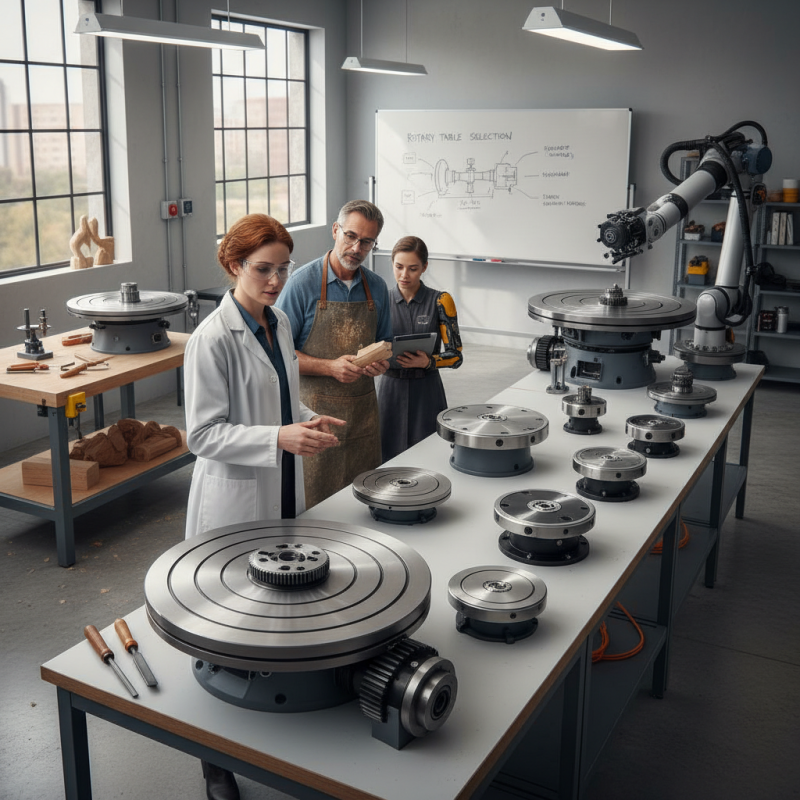
How to Choose the Best Turning Rotating Table for Your Needs?

Understanding the Basics of Turning Rotating Tables

When choosing a turning rotating table, understanding its basics is crucial. These tables allow for precision in various applications. They are often used in machining, photography, and woodworking. Knowing how they operate can help you make better decisions.

One essential aspect is the table's rotation speed. Different applications require different speeds. A slower rotation may be beneficial for detailed work. Conversely, faster speeds are necessary for larger projects. Always consider the specific task at hand.

Tips to remember: Look for a model that fits your needs. Check weight capacity and dimensions carefully. A table that is too small or weak may compromise your work. Also, consider the material it’s made of to ensure durability.

Selecting the right turning table involves balancing these factors. You may find that one table excels in speed but lacks stability. Test different models if possible before making a commitment. This hands-on approach may expose unforeseen issues. Reflection on what you need can lead to better choices.

Identifying Your Specific Needs and Requirements

When selecting a turning rotating table, identifying your specific needs is crucial. The table you choose must align with your project requirements. Consider what tasks you'll perform. Will it be for woodworking or crafting? Knowing this helps narrow down options.

Check the weight capacity of the table. If you're working with heavy materials, look for sturdier models. A lightweight table may not offer the stability needed. Think about the size, too. A larger space provides more flexibility but can be cumbersome in small workshops.

Tips: Take detailed measurements of your workspace. This ensures the rotating table fits comfortably. Explore features like height adjustment and ease of rotation. These can greatly affect usability.

Don't overlook the pivot points of the table. A poorly designed pivot can hinder smooth operation. Reflect on whether the materials suit your environment. Wood might warp in humid conditions, while metal can be affected by rust. Balancing all these factors ensures you make a well-informed choice.

Evaluating Size and Weight Capacity for Your Projects

When selecting a turning rotating table, size and weight capacity are crucial. The table must fit your workspace efficiently. Measure the dimensions of your projects. A table that is too big can hinder movement. Conversely, a small table may not support larger pieces. Think about your workspace layout before making a choice.

Weight capacity is equally important. Consider the heaviest item you plan to use. Some tables may seem sturdy but quickly fail under heavy loads. Look for specifications and ratings. Test the table if possible. A table that struggles with weight can cause accidents. These issues are often overlooked, yet they can significantly impact your work quality.

Moreover, reflect on your long-term needs. Projects evolve and change in complexity. Choosing a table that meets your current and future requirements can save you from frequent upgrades. This reflects a thoughtful approach to purchasing essential equipment. It's about finding stability in your craft while adapting to potential challenges.

Assessing Material Quality and Durability Options

When assessing the quality and durability of turning rotating tables, material choice is crucial. Look for tables made from robust materials such as steel or aluminum. These options provide strength and resistance to wear. Wooden tables can offer aesthetic appeal but may not withstand heavy use. The right material affects longevity and overall performance.

Durability also depends on the construction method. Welded joints often represent better craftsmanship than mere screws. A well-constructed table can endure frequent use, reducing the need for replacements. Inspect for finish quality; powder coating often resists scratches effectively.

In real-world usage, consider how each material performs under pressure. For instance, some metal surfaces may dent easily during heavy manipulation. Evaluate user feedback to understand actual limitations. Testing before purchase can reveal unexpected weaknesses. An informed decision can lead to a reliable rotating table that suits your unique needs.

How to Choose the Best Turning Rotating Table for Your Needs? - Assessing Material Quality and Durability Options

Material Durability Rating Weight Capacity (lbs) Price Range ($)
Aluminum High 300 150 - 250
Steel Very High 500 200 - 400
Plastic Medium 200 50 - 100
Wood Medium to High 350 100 - 200

Considering Control Mechanisms and User Interface Features

Selecting a turning rotating table involves assessing its control mechanisms and user interface features. The ease of use can significantly impact productivity. A report by the International Association of Machinery Manufacturers highlights that user-friendly interfaces can enhance operational speed by up to 30%. Therefore, intuitive controls are essential for minimizing errors during operation.

Moreover, the type of control mechanism plays a critical role. Tables equipped with programmable controls allow for precise adjustments. This adaptability can lead to improved quality in applications ranging from manufacturing to research. According to the Machine Tool Dealers' Association, 45% of manufacturers reported increased efficiency from adopting tables with advanced user interfaces.

However, not all systems function perfectly. Some users have mentioned frustrations with features that seem extravagant or overwhelming. It is vital to choose a system that balances complexity and simplicity. Striving for an optimal user experience while navigating through complex tasks can reveal both strengths and weaknesses in design. Each feature should serve a clear purpose to avoid unnecessary complications.

Our dedicated sales and support staff are here to help you identify the ideal pump solution for your needs.

Contact Us