
Top 10 CNC Turning Center Features You Should Know?

In the world of precision manufacturing, understanding the features of a CNC Turning Center is crucial. As John Smith, a renowned expert in CNC technology, aptly notes, "The right features can significantly enhance production efficiency." When using a CNC Turning Center, each element plays a vital role in overall performance.

For instance, spindle speed and tool capacity are key features that can influence machining precision. Manufacturers must pay careful attention to these attributes. An advanced CNC Turning Center can transform the production process, but not all machines are created equal. It's essential to know which features matter most.

Moreover, while many operators focus on technology, they often overlook the importance of operator training. Without skilled technicians, even the best CNC Turning Center may underperform. Thus, reflecting on both the machine's capabilities and the team's skill set is necessary for achieving optimal results. A thorough understanding can lead to improvements in both efficiency and quality.
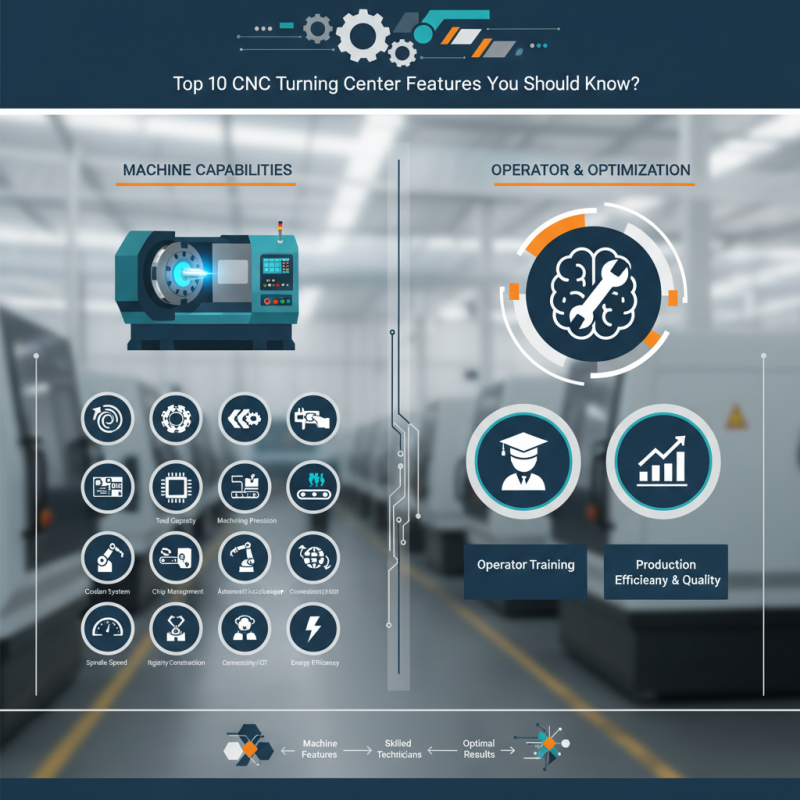
Top 10 CNC Turning Center Features You Should Know?

Key Benefits of CNC Turning Centers for Precision Machining

CNC turning centers are crucial for precision machining. They offer high accuracy and flexibility, essential for modern manufacturing. The ability to create complex shapes with tight tolerances sets them apart from traditional methods. Operators can achieve intricate designs without sacrificing quality. This adaptability allows businesses to respond quickly to customer demands.

The automation of CNC turning centers reduces human error. Programmable operations enhance consistency in production. Yet, reliance on technology can pose challenges. A program malfunction could lead to flawed parts. Regular training for operators is vital to minimize mistakes. Understanding each feature of the turning center can elevate production quality.

Moreover, these machines significantly cut down on production time. Quick changeovers mean less downtime. However, achieving optimal efficiency requires careful planning. Inefficient workflows can negate time savings. Striking a balance between speed and quality is essential for success in precision machining.

Essential Specifications to Consider When Choosing a CNC Turning Center

When choosing a CNC turning center, specific specifications are critical. Consider the size of the workpiece. A larger capacity allows for a wider range of operations. Check the spindle speed. Faster speeds can enhance productivity but may increase wear. Next, examine the control system. An intuitive interface can significantly reduce learning time.

Tip: Always prioritize ease of use. A complicated system can slow down production. Ensure your team is comfortable with the controls.

Accuracy is another vital specification. Look for precision ratings and tolerances. Keep in mind, even minor errors can lead to significant issues down the line.

Tip: Invest in a machine with reliable feedback systems. They help in maintaining accuracy and can signal problems early. Remember, precision isn’t just about the machine; it’s about the entire process.

Flexibility in tooling is also essential. Diverse tooling options provide better customization. It’s not uncommon to find limitations with specific models. Reflect on whether a machine meets your future needs, not just current ones. Each specification affects your operational efficiency and productivity in unique ways.

Top 10 CNC Turning Center Features You Should Know

Innovative Technologies Enhancing CNC Turning Center Performance

CNC turning centers are evolving rapidly. Cutting-edge technologies are enhancing their performance significantly. According to recent reports, these innovations are leading to up to a 30% increase in production efficiency. For instance, advanced tool technology allows for better durability and precision. This improved accuracy can reduce waste by nearly 20%.

Automation plays a crucial role in the modern CNC landscape. The integration of AI-driven solutions is becoming common. These systems enable predictive maintenance, reducing downtime by as much as 25%. However, many manufacturers still struggle to fully implement these technologies. The learning curve can deter investment in newer systems, causing missed opportunities.

Additionally, the introduction of IoT devices allows for real-time monitoring. This connectivity enhances workflow and operational transparency. Yet, some companies are hesitant to adopt these advancements. Concerns over cybersecurity can impede progress. Balancing innovation with safety remains a challenge in the industry.

Important Maintenance Tips for Maximizing CNC Turning Center Longevity

Proper maintenance of a CNC turning center is crucial for extending its lifespan. Regularly inspect the machine’s components for wear and tear. Check the spindle for any unusual vibrations. These signs can indicate bigger problems ahead. Addressing them early helps avoid costly repairs later.

Keep the lubrication system in check. Inadequate lubrication can lead to overheating and faster wear. Clean the coolant tank regularly to prevent contamination. This simple step can prolong tool life. Also, daily cleaning of the work area prevents buildup of debris that might affect performance.

Operators should maintain a log of maintenance activities. This record can highlight patterns that need attention. Sometimes, small issues get overlooked. Reflecting on these logs can lead to a more proactive care of the equipment. Ultimately, a well-maintained CNC turning center will deliver better precision and efficiency.

Common Applications of CNC Turning Centers in Various Industries

CNC turning centers are essential in various industries, proving their versatility and precision. These machines are widely used in automotive, aerospace, and medical sectors. For instance, about 39% of manufacturers in the automotive industry utilize CNC turning for complex parts. This highlights the machine's ability to handle intricate designs required in engine components and structural parts.

In the aerospace field, CNC turning centers are applied for producing lightweight, high-strength components. Recent reports indicate that 27% of aerospace parts are fabricated using CNC turning. This process allows for high tolerances and repeatability, crucial in this industry. However, while CNC turning enhances efficiency, some operators face challenges in programming and maintaining the machines, which can lead to downtime.

The medical industry also benefits from CNC technology. According to industry data, approximately 33% of medical devices involve CNC turning in their production. From precision surgical instruments to implants, the accuracy provided by these centers is vital. Yet, many manufacturers struggle with balancing speed and precision. Overlooking these aspects can result in costly errors or delays in production schedules.

Our dedicated sales and support staff are here to help you identify the ideal pump solution for your needs.

Contact Us