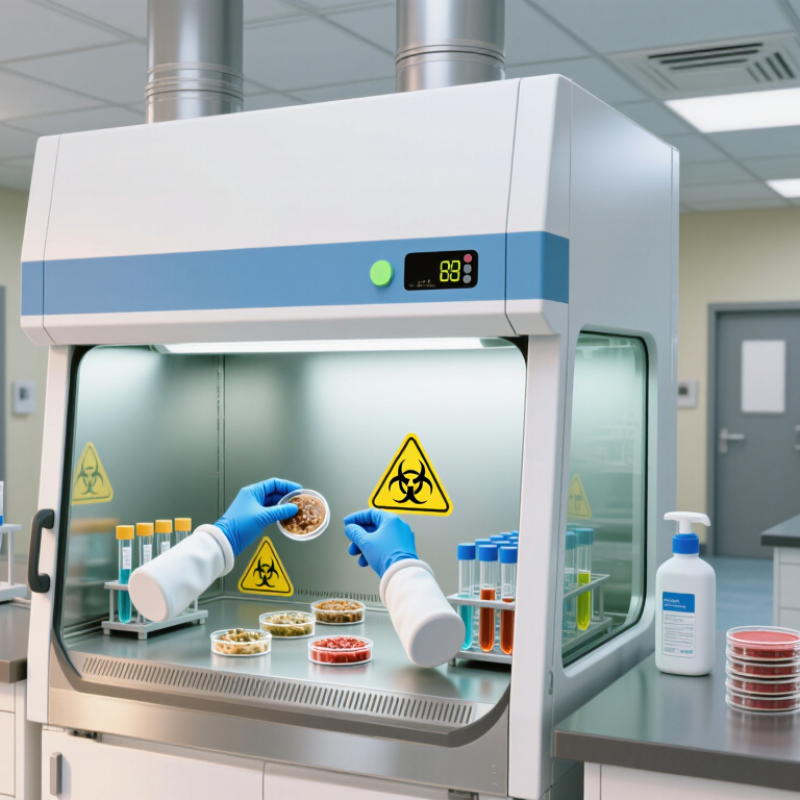
How to Choose the Right Microbiology Cabinet?

Choosing the right Microbiology Cabinet is not simply a matter of buying the largest unit. It is a risk-control decision shaped by organisms, procedures, staff training, and room conditions. A cabinet used for harmless teaching cultures may require different protection from one handling clinical specimens. The distinction matters. A clean bench protects samples, while a properly selected biosafety cabinet can protect personnel, samples, and the surrounding environment. Confusing these roles creates avoidable exposure risks.

A practical selection begins with a written task assessment. Identify aerosol-generating steps, culture volumes, disinfectants, heat sources, and waste routes. Check whether the work requires inward airflow, HEPA filtration, or chemical-resistant surfaces. Inspect the proposed room, too. Door movement, supply-air turbulence, limited clearance, and nearby equipment can affect containment. Small details matter. An airflow alarm should be visible, the work opening should feel comfortable, and the front grille must remain unobstructed. It is easy to overlook ergonomics when specifications look impressive.

This guide compares cabinet types, certification needs, installation conditions, and daily operating habits. It draws on established biosafety principles and practical checks used by trained laboratory professionals. Still, no cabinet replaces a risk assessment or competent supervision. Manufacturer claims deserve verification. So do local requirements, service records, and independent performance certification. The best choice is not always the newest model. Sometimes, a simpler cabinet, correctly installed and consistently maintained, offers more dependable protection. That conclusion may seem obvious, yet many purchasing decisions treat maintenance as an afterthought.

How to Choose the Right Microbiology Cabinet?

Understanding Microbiology Cabinet Types and Their Primary Uses

Choosing the right microbiology cabinet starts with the work, not the equipment’s appearance. The CDC and NIH BMBL, 6th edition, separates laboratory work into four biosafety levels. Each level reflects different risks and containment needs. A Class I cabinet protects personnel and the environment, but it does not protect the sample. It suits procedures that may release aerosols, such as culture waste handling. A Class II cabinet provides inward airflow and filtered exhaust. It protects the worker, product, and surrounding room. Class II Type A2 is widely used for routine microbiology, cell culture, and clinical sample preparation.

Class III cabinets offer the highest physical containment. Their sealed construction and glove ports support work involving serious, easily transmitted hazards. However, they are expensive and less flexible. The WHO Laboratory Biosafety Manual, 4th edition, emphasizes risk assessment before selecting containment equipment. NSF/ANSI 49 also distinguishes Class II configurations, including A1, A2, B1, and B2. These types differ in exhaust arrangements and chemical compatibility. A cabinet can look powerful, yet poor installation can quietly weaken its protection. Air turbulence, blocked grilles, and overdue certification remain common practical problems.

Tips: Match the cabinet to the procedure, biological risk, volatile chemicals, and exhaust system. Do not use a clean bench as a substitute for personnel protection. Check certification records, airflow alarms, filter condition, and room placement. When uncertain, consult an institutional biosafety officer and document the decision. Perfect selection is uncommon; careful review matters more.

Assessing Biosafety, Containment, and Laboratory Requirements

Choosing the right microbiology cabinet begins with a documented risk assessment, not cabinet size. The CDC/NIH Biosafety in Microbiological and Biomedical Laboratories, 6th edition, identifies Class II biological safety cabinets as equipment that protects personnel, products, and the environment. This protection depends on the agent, procedure, aerosol potential, and workflow. A cabinet should match the highest credible risk, not the easiest experiment.

Ask practical questions. Will staff open cultures, centrifuge samples, or handle splash-prone liquids? Does the room support stable airflow and enough clearance for service? A HEPA-filtered cabinet controls particles, but it does not remove chemical vapors. That distinction is often missed. Poor placement near doors, fans, or supply vents can disrupt airflow and weaken containment. Small details matter.

The WHO Laboratory Biosafety Manual, 4th edition, treats risk assessment as a continuous process. Reassess when procedures, personnel, instruments, or sample volumes change. NSF/ANSI 49 guidance calls for field certification at least annually, and after relocation or major service. Certification should verify inflow, downflow, filter integrity, alarms, and cabinet performance. Keep the records visible and specific. A clean cabinet can still be unsuitable. I would also question whether every routine task truly needs the same cabinet class; over-specification increases cost, while under-specification creates unacceptable exposure risk.

Comparing Cabinet Design, Performance, and Essential Features

How to Choose the Right Microbiology Cabinet?

Cabinet design affects both protection and daily usability. A practical evaluation starts with the workspace, not the product brochure. Check the sash opening, internal depth, and access to supplies. A cramped chamber encourages awkward movements and contamination risks. Rounded corners help cleaning, while sealed surfaces reduce residue collection. Adjustable work heights can also protect technicians during long procedures. Small details matter.

Performance depends on stable airflow, effective filtration, and reliable containment. A cabinet should maintain its rated airflow under normal operating conditions. Airflow alarms must be clear and easy to notice. Noise matters too; excessive sound can cause fatigue and discourage proper use. Ask for independent certification, test records, and maintenance requirements. Local standards may differ, so technical claims need careful verification. A high-efficiency filter is important, but it does not replace correct operating technique.

Essential features include a visible airflow display, an emergency stop function, durable lighting, and easy-to-clean work surfaces. Some models include motorized sashes or energy-saving modes. These features can be useful, but complexity sometimes creates new maintenance problems. I would inspect access panels and replacement procedures before making a decision. A quiet cabinet is not automatically safer. A sophisticated cabinet may still perform poorly if it is incorrectly installed or overloaded. Leave enough space for safe hand movement. Then test the cabinet under realistic working conditions, with the tools and containers technicians actually use.

Selecting the Right Size, Configuration, and Installation Conditions

How to Choose the Right Microbiology Cabinet?

Selecting the Right Size, Configuration, and Installation Conditions

Cabinet selection should begin with a documented risk assessment, not available floor space. The WHO Laboratory Biosafety Manual, 4th edition, recommends matching containment equipment to hazards, procedures, and workflow. Measure the largest equipment, hand movements, and waste path before choosing cabinet width. A 1.2-meter cabinet may fit routine work, but a crowded sash area can disrupt airflow. More space is not automatically safer.

Configuration also matters. Class II cabinets protect personnel, samples, and the surrounding environment when installed and operated correctly. NSF/ANSI 49-2022 specifies a minimum inflow velocity of 100 feet per minute for common Class II Type A2 cabinets. However, this value does not excuse poor room design. Avoid placing the cabinet beside doors, busy walkways, supply diffusers, or strong extraction points. Air turbulence can compromise performance.

Installation conditions deserve equal attention. The CDC/NIH BMBL, 6th edition, advises using certified equipment and following site-specific risk controls. NSF/ANSI 49 recommends field certification at least annually, plus certification after relocation or major service. Leave practical access for filters, electrical components, and testing instruments. Small errors matter. Experienced planners sometimes overfocus on cabinet specifications and undercheck the room. I would recheck door swings, ceiling height, emergency power, and operator reach before approval. A technically correct cabinet can still perform poorly in an unsuitable room.

Evaluating Certification, Maintenance, and Long-Term Operating Costs

How to Choose the Right Microbiology Cabinet?

Evaluating Certification, Maintenance, and Long-Term Operating Costs

A microbiology cabinet should be judged by evidence, not appearance. Ask for current certification records and the exact standard used. Certification should cover airflow, filter integrity, containment performance, alarms, and electrical safety. Requirements vary by country and cabinet type, so confirm them with a qualified, independent certifier.

Maintenance costs often appear small during purchase discussions. They are not. Plan for regular airflow checks, surface cleaning, filter testing, sensor verification, and documented service visits. A cabinet placed near doors may need more frequent checks because room turbulence affects performance. After relocation, repair, or unusual airflow readings, arrange recertification before normal work resumes.

Look beyond the purchase price. Compare annual certification, replacement filters, energy use, spare parts, and service labor. A quiet cabinet with efficient motors may reduce operating expenses, but only if technicians can maintain it easily. Ask how long critical parts remain available. Downtime also carries a cost, especially when scheduled work must stop.

Small details matter.

One practical mistake is trusting a low quotation without checking what it excludes. Travel fees, emergency callouts, and filter disposal may appear later. I would also question overly precise savings claims; laboratory energy use changes with fan settings, room temperature, and working hours. Keep service logs, review failures, and adjust the maintenance plan when real operating data disagrees with the original estimate.

How to Choose the Right Microbiology Cabinet? - Evaluating Certification, Maintenance, and Long-Term Operating Costs

Evaluation Dimension Class II Type A2 Biosafety Cabinet Class II Type B2 Biosafety Cabinet Class I Biosafety Cabinet PCR Clean Bench / Laminar-Flow Cabinet
Primary protection Personnel, environment, and product protection when correctly installed and operated. Personnel, environment, and product protection for work involving volatile toxic chemicals or radionuclides, when connected to a suitable exhaust system. Personnel and environmental protection; it does not provide reliable product protection. Product protection only; it does not protect the operator or room from hazardous biological aerosols.
Typical microbiology applications Routine culture work, non-volatile biological agents, clinical and research microbiology, and moderate-risk biological procedures. Work combining biological agents with significant quantities of volatile toxic chemicals or radionuclides. Procedures where operator and environmental protection are required but sterile product protection is not. Non-hazardous reagent preparation, PCR setup, and contamination-sensitive work involving materials that do not require containment.
Airflow configuration Inward airflow at the front opening; HEPA-filtered downflow; approximately 70% of air recirculates and 30% is exhausted through a HEPA filter in the standard configuration. Total-exhaust design; cabinet air is not recirculated back into the laboratory and must be discharged through a properly designed exhaust system. Air is drawn inward through the front opening and exhausted through HEPA filtration; the work zone is not supplied with sterile vertical downflow. HEPA-filtered air flows toward the work surface and into the room; airflow is not intended for containment.
Relevant certification framework NSF/ANSI 49 is widely used in North America; EN 12469 is commonly used in Europe and other markets. Select the standard required by local regulations and institutional policy. The same cabinet performance standards may apply, but the exhaust installation must also meet applicable mechanical, electrical, fire, and occupational-safety requirements. Certification is generally evaluated against the applicable biosafety-cabinet standard, such as NSF/ANSI 49 or EN 12469, depending on location. It should not be substituted for a certified biosafety cabinet. Product-cleanliness performance and electrical safety should be verified separately.
Minimum certification checks before use Downflow and inflow velocity, HEPA-filter integrity, smoke-pattern testing, cabinet leakage, airflow alarms, electrical safety, and installation-site assessment. All Type A2 checks plus exhaust-volume verification, building exhaust interlock, duct integrity, discharge location, and confirmation that the exhaust system is suitable for the cabinet. Inflow velocity, HEPA-filter integrity, smoke-pattern testing, cabinet leakage, airflow alarms where fitted, and electrical safety. Airflow velocity and uniformity, HEPA-filter integrity, cleanliness controls, and electrical safety; biological containment testing is not applicable in the same way.
Recertification frequency At least annually in many institutional programs, and after relocation, repair, filter replacement, or any event that may affect performance. Local rules and the governing standard take precedence. At least annually in many institutional programs, with additional testing after exhaust-system changes, relocation, repair, or filter replacement. Typically annually and after relocation, repair, or filter replacement, subject to the applicable standard and site policy. Frequency depends on the quality system and contamination risk; it should not be treated as a substitute for biosafety-cabinet certification.
HEPA filtration HEPA filters are commonly specified at a minimum efficiency of 99.97% for 0.3-micrometre particles under the applicable test method. Uses HEPA filtration for cabinet air; the exhaust arrangement and chemical compatibility must be evaluated because HEPA filters do not remove most chemical vapors. HEPA-filtered exhaust protects the room and environment from biological aerosols; product protection is not provided. HEPA-filtered supply air helps protect the work from airborne particles but does not provide personnel or environmental containment.
Maintenance workload Moderate: surface cleaning, prefilter inspection where fitted, airflow-alarm checks, annual certification, and eventual HEPA replacement. High: all routine cabinet maintenance plus exhaust-fan, ductwork, interlock, building-airflow, and chemical-safety inspections. Moderate: cleaning, airflow verification, filter inspection, annual certification, and eventual HEPA replacement. Low to moderate: cleaning, airflow checks, filter inspection, and replacement based on pressure drop and performance.
Filter replacement timing There is no universal calendar interval. Replace when integrity testing fails, pressure drop becomes unacceptable, airflow cannot be maintained, or contamination requires replacement. The same performance-based approach applies, with additional evaluation of exhaust-system condition and chemical exposure. Replace based on failed integrity testing, excessive pressure drop, inadequate airflow, or contamination—not solely on age. Replace when airflow, pressure drop, or filter-integrity results indicate reduced performance.
Installation complexity Medium. Requires suitable room airflow, clearance, electrical service, and certification after installation. A canopy connection may be used only when permitted by the design and standard. Very high. Requires dedicated, reliable exhaust capacity, correct duct design, alarms or interlocks, make-up air, and coordination with building services. Medium. Requires appropriate room placement, electrical service, exhaust arrangement, and post-installation certification. Low to medium, but placement must avoid drafts, doors, high-traffic areas, and other disturbances that can disrupt clean airflow.
Typical energy profile Usually lower than a total-exhaust cabinet because much of the air is recirculated, although the blower may operate continuously. Highest among the listed options in many installations because the cabinet and building exhaust system operate continuously and require conditioned replacement air. Generally moderate; energy demand depends on blower power, operating hours, room conditions, and exhaust configuration. Generally lower than total-exhaust biosafety cabinets, but actual consumption depends on fan type, cabinet size, and operating schedule.
Illustrative annual electricity cost For a 1.0 kW average load operated 8 hours per day for 250 days at $0.15/kWh: approximately $300 per year, excluding room HVAC impact. Cabinet electricity alone can be similar to or higher than the example above; additional building exhaust and conditioned make-up air may materially increase total cost. For a 0.8 kW average load under the same assumptions: approximately $240 per year, excluding room HVAC impact. For a 0.6 kW average load under the same assumptions: approximately $180 per year, excluding room HVAC impact.
Long-term operating-cost drivers Annual certification, service labor, replacement filters, blower components, cleaning, downtime, and electrical consumption. All Type A2 costs plus exhaust-fan maintenance, duct inspections, make-up air, HVAC load, control-system testing, and potentially higher installation costs. Certification, filter replacement, service labor, electrical consumption, and possible room exhaust costs. Filter replacement, fan energy, cleaning, performance checks, and the cost of managing contamination if the cabinet is incorrectly used for hazardous work.
Best choice when The laboratory needs balanced personnel, environmental, and product protection for routine microbiology without significant volatile chemical use. The risk assessment confirms that biological work must be combined with volatile toxic chemicals or radionuclides and the facility can support dedicated exhaust. Operator and environmental protection are required, but sterile handling of the product is not a primary requirement. The work is non-hazardous and the main objective is to reduce contamination of samples, reagents, or amplification reactions.
Main selection warning Do not use a Type A2 cabinet for significant volatile chemical work unless the installation is specifically designed, approved, and operated for that purpose. Do not select a Type B2 cabinet without confirming building exhaust capacity, emergency operation, make-up air, and total lifecycle cost. Do not use a Class I cabinet when sterile product protection is required. Never use a clean bench as a biosafety cabinet for infectious, toxic, or otherwise hazardous biological materials.

Note: Performance, certification, service intervals, energy use, and total cost vary by cabinet size, airflow design, operating schedule, laboratory HVAC conditions, local regulations, and the governing certification standard. Final selection should be based on a documented risk assessment and verification by a qualified field certifier.

Our dedicated sales and support staff are here to help you identify the ideal pump solution for your needs.

Contact Us