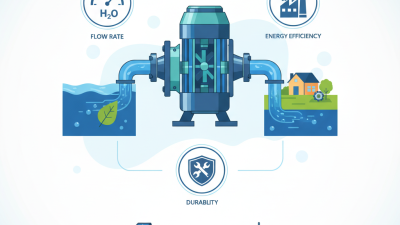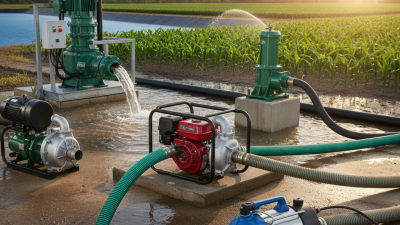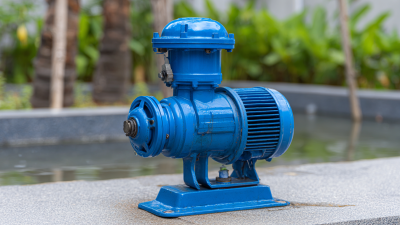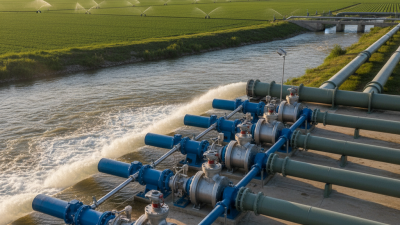
Choosing among the top 10 water pump suppliers worldwide requires more than comparing product prices. Pump performance affects water security, operating costs, maintenance schedules, and workplace reliability. The 2024 United Nations World Water Development Report highlights growing pressure on freshwater systems, especially from agriculture, cities, and industry. That pressure makes dependable pumping equipment increasingly important.
Energy efficiency also deserves close attention. The U.S. Department of Energy reports that pumping systems may consume 25% to 50% of industrial electricity in some facilities. A poorly sized pump can run loudly, overheat, and waste energy every hour. Small design errors become expensive over time. They are not always visible.
This guide evaluates leading manufacturers through practical criteria, including flow performance, head range, materials, motor efficiency, automation, after-sales service, certifications, and global distribution. It also considers experience in municipal water, irrigation, construction, mining, and industrial processing. Market studies from Grand View Research and MarketsandMarkets indicate continued expansion in water and industrial pump demand, although their market boundaries and forecasts differ. That difference matters. Market numbers should be read carefully, not treated as absolute truth.
A strong supplier water pump should provide transparent technical data, realistic delivery commitments, replacement parts, and responsive engineering support. Brand recognition alone is insufficient. Field conditions often expose weaknesses that brochures hide. The final ranking therefore balances published specifications with service capability, application experience, and long-term ownership value. Some suppliers may excel globally but perform poorly in a specific region. Buyers should verify local references before signing a contract.
Ranking global water pump suppliers requires more than comparing sales figures. A reliable assessment begins with verified operating performance, product quality, and documented field experience. Engineers should examine flow stability, pressure control, energy consumption, and vibration levels under real working conditions. A pump that performs well in a test facility may behave differently in a dusty plant room or coastal installation. Small details matter.
Independent certifications can support credibility, but certificates alone cannot prove long-term value. Supplier rankings should consider manufacturing controls, material traceability, warranty terms, and the availability of replacement parts. Service coverage also deserves close attention. Can technicians respond quickly? Are repair manuals clear? Does the supplier maintain local inventory? These questions expose practical differences between competing suppliers.
Delivery reliability, project customization, digital monitoring, and lifecycle costs should also influence the ranking. The lowest purchase price is rarely the lowest operating cost.
There is no perfect global list. Public data may be incomplete, and some suppliers report performance more openly than others. That creates an unavoidable judgment gap. A fair method should combine audited information, customer experience, technical interviews, and on-site observations. It should also review safety practices and environmental performance across production and operation. Rankings need regular updates, because service quality, supply chains, and product platforms can change quickly. A strong supplier is not merely large; it is measurable, responsive, and consistent when conditions become difficult.
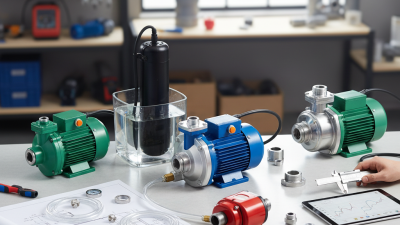
Mapping the worldwide water pump supplier market requires more than counting factory size. A useful ranking should examine pump efficiency, production capacity, testing procedures, service coverage, and replacement-part access. Suppliers serving municipal water systems often provide large centrifugal units, while agricultural buyers need durable pumps for wells, irrigation, and uneven power conditions. Industrial users usually demand corrosion resistance, precise flow control, and documented performance.
Geography changes the buying decision. European suppliers often emphasize engineering standards and energy efficiency. Asian manufacturers may offer broad product ranges and competitive production costs. North American suppliers commonly provide strong technical support for infrastructure projects. Regional specialists in the Middle East, Africa, and Southeast Asia can understand local water quality, voltage limits, and installation habits better. Local support matters. Response time can decide whether a pump remains useful or sits idle.
A reliable market map should compare at least ten suppliers using the same evidence. Review factory audits, third-party test reports, warranty terms, delivery records, and technician training. Ask for operating curves, material specifications, and field references. Marketing claims can look impressive. Data can mislead. Some suppliers publish laboratory results but provide limited information about real operating conditions. That gap deserves attention. Buyers should also calculate lifetime cost, including electricity, maintenance, downtime, and transport. The cheapest quotation may become expensive after repeated seal failures or delayed parts. Rankings remain imperfect because performance depends on installation quality, water conditions, and operator skill.
Top 10 Water Pump Suppliers Worldwide?
Profiles of the Top Ten Water Pump Suppliers
The leading ten water pump suppliers serve municipal, agricultural, industrial, and building projects. Their profiles differ by engineering depth, regional coverage, and after-sales support. Some focus on high-efficiency centrifugal pumps, while others specialize in submersible, solar-powered, or wastewater equipment. Grand View Research valued the global water pump market at about USD 61 billion in 2023. Its report also expects steady growth through 2030, driven by irrigation, urban expansion, and aging water networks.
A reliable supplier profile should examine more than production volume. It should assess hydraulic efficiency, materials, certification, spare-parts access, and lifecycle cost. Suppliers serving corrosive wastewater often use stainless steel or coated cast iron. Agricultural specialists may offer compact pumps for wells, farms, and remote sites. Industrial providers usually support customized flow rates, pressure levels, monitoring systems, and maintenance contracts. Fortune Business Insights projects the water pump market to grow at roughly 4% annually during the forecast period. Still, market rankings can change quickly. Sales figures alone may not reflect field reliability.
Tips: Compare the pump curve with actual site conditions. Check flow, head, motor efficiency, noise, and voltage requirements. Ask for tested performance data, not only brochure claims. Review local service response times and replacement-part availability. A cheaper purchase can become expensive after repeated seal failures. That detail is often overlooked.
| Rank | Anonymous Supplier Profile | Primary Market Base | Main Pump Technologies | Key Application Areas | Global Coverage | Typical Service Strength | Commonly Documented Compliance Focus |
|---|---|---|---|---|---|---|---|
| 1 | Supplier Profile 01 | North America | End-suction centrifugal, vertical turbine, split-case, multistage, and submersible pumps | Municipal water and wastewater, commercial buildings, agriculture, fire protection, and industrial process water | North America with distribution and service support in Europe, Asia, and Latin America | Engineered packages, replacement equipment, field diagnostics, and aftermarket parts | Product-specific drinking-water approvals, fire-pump standards, and ISO-based quality systems |
| 2 | Supplier Profile 02 | Northern Europe | Circulator, booster, vertical multistage, submersible drainage, and wastewater pumps | Building services, district heating, municipal utilities, groundwater, agriculture, and light industry | Broad international distribution across Europe, Asia-Pacific, the Middle East, and the Americas | Energy-efficiency consulting, system design, remote monitoring, and authorized service networks | Energy-performance testing, drinking-water material requirements, CE compliance, and ISO 9001 practices |
| 3 | Supplier Profile 03 | Central Europe | Centrifugal, axial-flow, mixed-flow, wastewater, slurry, and high-pressure process pumps | Water treatment, mining, power generation, chemical processing, oil and gas, and heavy industry | Manufacturing and service presence in Europe with established international project coverage | Large-project engineering, pump refurbishment, condition assessment, and lifecycle support | Industrial quality management, hazardous-area requirements, pressure equipment rules, and application-specific standards |
| 4 | Supplier Profile 04 | Western Europe | Process centrifugal, positive-displacement, chemical, slurry, and high-pressure pumps | Water and wastewater, pulp and paper, chemical production, mining, energy, and marine systems | International project business supported by regional sales offices and service centers | Application engineering, retrofit projects, mechanical-seal support, and predictive maintenance | ISO-based manufacturing controls, environmental management, ATEX-related requirements, and sector standards |
| 5 | Supplier Profile 05 | East Asia | End-suction, split-case, vertical turbine, multistage, sewage, and seawater pumps | Municipal infrastructure, desalination, irrigation, building services, power plants, and marine applications | Strong domestic manufacturing base with exports and project activity across Asia, the Middle East, and other regions | Large-flow equipment, customized engineering, project commissioning, and spare-parts supply | International product testing, marine approvals where applicable, drinking-water requirements, and ISO 9001 systems |
| 6 | Supplier Profile 06 | Western Europe | Heating circulators, pressure-boosting systems, drainage pumps, sewage pumps, and smart pumping units | Residential and commercial buildings, HVAC, municipal wastewater, water supply, and industrial facilities | Extensive European presence with international distributors and technical support partners | Compact system design, digital controls, commissioning assistance, and energy-saving upgrades | CE requirements, electrical safety, building-services standards, drinking-water approvals, and ISO quality practices |
| 7 | Supplier Profile 07 | North America | Industrial centrifugal, positive-displacement, vertical, reciprocating, and specialty process pumps | Oil and gas, chemical processing, power generation, water treatment, general industry, and marine operations | Global industrial project reach through regional offices, distributors, and service facilities | High-specification engineering, rotating-equipment repair, testing, and long-term maintenance programs | API-related specifications, hazardous-location requirements, pressure standards, and ISO-certified operations |
| 8 | Supplier Profile 08 | North America | Residential well pumps, submersible motors, booster systems, irrigation pumps, and wastewater equipment | Groundwater extraction, residential water supply, agriculture, irrigation, pressure boosting, and light commercial use | Strong North American channel with international distributors and component supply relationships | Dealer training, motor-and-pump matching, replacement support, and packaged water-system solutions | Electrical safety listings, drinking-water material requirements, motor-efficiency rules, and ISO quality systems |
| 9 | Supplier Profile 09 | South Asia | Monoblock, end-suction, submersible, vertical multistage, sewage, and agricultural pumps | Irrigation, rural water supply, residential systems, municipal projects, construction, and general industry | Large domestic market supported by exports and distributor networks in Asia, Africa, and the Middle East | High-volume production, localized spare parts, dealer service, and cost-focused system packages | National product standards, energy-label requirements, electrical safety, and ISO-based quality controls |
| 10 | Supplier Profile 10 | East Asia | Submersible drainage, sewage, grinder, dewatering, process, and corrosion-resistant pumps | Construction dewatering, municipal wastewater, mining, tunneling, flood control, and industrial drainage | Strong regional presence with export sales and specialized distributors in multiple overseas markets | Rugged equipment selection, rental and dewatering support, field repair, and emergency replacement supply | Electrical safety, environmental protection, wastewater performance, marine approvals where applicable, and ISO quality practices |
Top 10 Water Pump Suppliers Worldwide?
A useful global ranking should compare more than sales figures. The leading ten suppliers typically cover centrifugal, positive displacement, submersible, and vertical turbine technologies. Each design suits different operating conditions. Centrifugal pumps support municipal water networks and HVAC systems. Positive displacement pumps handle thick fluids and precise chemical dosing. Submersible models work below ground, often in drainage pits or wastewater stations.
Industry experience changes the purchasing decision. Mining sites need abrasion-resistant materials for slurry. Food processors require hygienic surfaces and easy cleaning. Desalination plants demand corrosion control, stable pressure, and continuous monitoring. In the field, engineers should check flow rate, total head, motor efficiency, seal design, and maintenance access. A pump that performs well in a test room may struggle with sand, heat, or unstable electricity.
Global reach also means practical support. Strong suppliers maintain regional warehouses, trained technicians, spare seals, and clear installation guides. Remote monitoring can reveal vibration before a breakdown stops production. However, service quality may differ between countries. That weakness deserves attention. My ranking would therefore reward documented case studies, transparent testing, safety compliance, and response times, not impressive advertising. Local voltage standards and water chemistry can change the final choice. A lower-priced unit may become expensive after repeated seal failures. Testing a pilot installation first is often wiser.
Supplier reliability deserves more attention than product ranking. A pump can meet its specifications yet fail under dusty, humid, or unstable operating conditions. Experienced buyers should request test records, material certificates, and references from comparable installations. Ask how often failures occur, not only how long the warranty lasts. A reliable supplier shares realistic performance data, including flow rate, pressure, efficiency, and expected service intervals.
Service quality becomes visible after installation. Check whether trained technicians are available near the operating site. Response time matters when a pump supports irrigation, cooling, or wastewater handling. Suppliers should provide clear manuals, spare-part lists, and troubleshooting procedures.
One practical test is simple: send a technical question before signing. The clarity and speed of the reply often reveal future support quality. Small details matter.
Long-term value includes energy use, maintenance labor, downtime, and replacement parts. A cheaper purchase may create higher costs over ten years. Buyers should compare lifecycle estimates using actual operating hours and electricity prices. I have seen projects overlook seal replacement costs and emergency transport fees. That mistake is easy to repeat. A strong supplier also explains what the equipment cannot handle. No system fits every site. Independent inspections, service records, and written commitments can make supplier comparisons more reliable, although no scorecard can predict every failure.
We are here to help you with all your queries and concerns, just write to us using the below form and we will get back to you as soon as we can.