
Electric Heat Relay technology quietly controls many systems that people depend on every day. It switches heating loads, protects equipment, and supports stable temperatures in factories, appliances, vehicles, and commercial buildings. As electrical engineering educator Tony Kuphaldt explains, “A relay is an electrically controlled switch.” That simple definition still matters when a relay manages high current beside sensitive control electronics.
This Top 10 Electric Heat Relay Manufacturers in 2026 guide examines companies shaping this specialized market. The comparison considers switching capacity, contact durability, response time, insulation performance, thermal management, certifications, production consistency, and technical support. Real installation details matter. A relay may operate inside a dusty control cabinet, beside a heating element reaching several hundred degrees, or within a panel cycling thousands of times daily.
The list is not a universal verdict. Application requirements differ, and published specifications can hide practical limitations. A compact solid-state relay may reduce mechanical wear, yet require a heat sink. An electromechanical design may handle harsh conditions well, but produce audible switching and contact wear. That trade-off deserves attention.
I have also left room for uncertainty. Manufacturer data is useful, but field performance can change with wiring quality, ambient temperature, load type, and maintenance habits. Buyers should verify current ratings, leakage current, switching frequency, and regional compliance before selecting a product. The strongest manufacturers are not always the largest names. They are the companies that document performance clearly, respond to engineering questions, and deliver consistent units over time. That is where reliability becomes measurable.
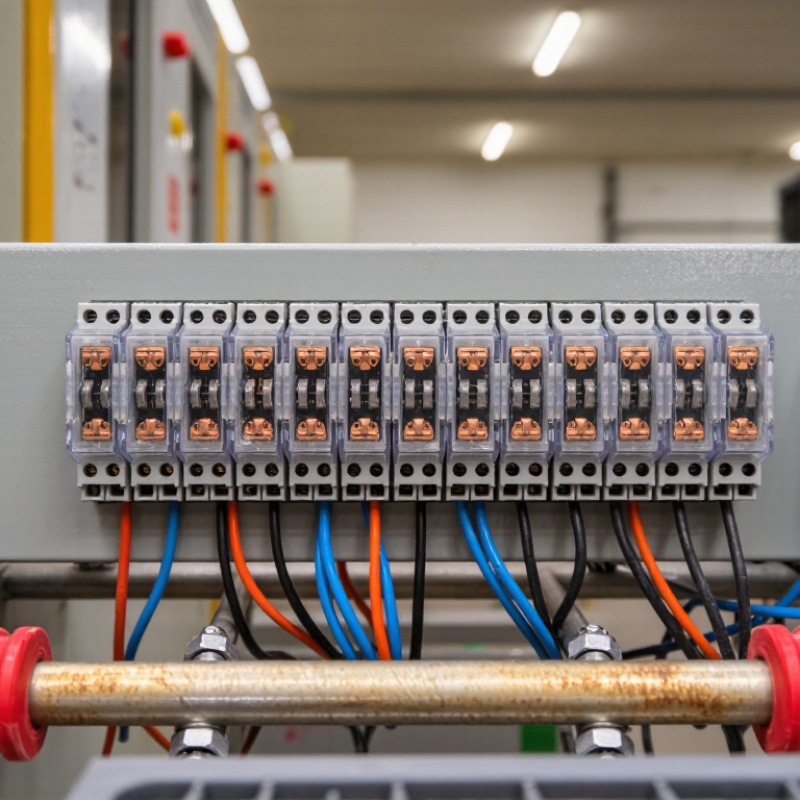
An electric heat relay is a switching device used to control electrical heating equipment. It responds to a control signal, such as a thermostat or temperature controller, and opens or closes a circuit. This lets a system manage power to heaters without routing every control action through a manual switch. In an industrial cabinet, for example, a relay may switch a heating element that keeps a process tank near its target temperature. The relay does not measure temperature by itself; a separate sensor and controller usually provide that information.
Its role is practical and specific. A properly selected relay can help control heater operation, reduce unnecessary switching, and separate low-voltage control signals from higher-power circuits. Selection depends on factors such as load current, voltage, switching frequency, ambient temperature, and the type of heater. A relay rated only by its headline current may still be unsuitable for a particular installation. That detail is easy to overlook. Check the equipment documentation and have a qualified professional assess wiring and protection requirements.
Electric heat relays are becoming more important as heating systems add sensors, digital controls, and variable power loads. The International Energy Agency reported that global heat pump sales grew by 11% in 2022, increasing demand for reliable switching components. Modern relays must handle repeated thermal cycling without welded contacts or excessive heat.
Key technology starts with contact materials and arc-control design. Silver alloy contacts improve conductivity and resist pitting during frequent switching. Zero-cross switching can reduce electrical stress when AC loads are connected. Solid-state relays use semiconductor devices instead of mechanical contacts, enabling silent operation and faster response. However, they may create continuous heat, so thermal pads, heat sinks, and airflow become necessary. That detail is often underestimated.
Digital relays now combine temperature sensing, fault detection, and communication interfaces. IEC 61810 provides important performance requirements for electromechanical relays, while IEC 62314 addresses solid-state relay expectations. Market research published by MarketsandMarkets has projected continued growth in the global relay market through the decade, driven by industrial automation and electrification. The figure is useful, but market forecasts can shift quickly. Field testing still matters more than optimistic charts. Engineers should verify switching life, insulation distance, inrush current, and enclosure temperature under real operating conditions. A relay that passes a bench test may fail inside a crowded control cabinet.
The chart compares representative turn-on response times for relay technologies commonly used in electric heating control. Semiconductor-based SSRs provide faster switching than electromechanical devices, while TRIAC and SCR outputs are widely used for AC resistive loads. Actual performance varies with load type, switching circuit, temperature, and product design.
Criteria for Ranking Manufacturers in 2026
Ranking electric heat relay manufacturers in 2026 requires more than comparing catalog prices. I would examine switching accuracy, contact durability, response time, and thermal stability under repeated loads. Independent laboratory reports should support these claims. Test data matters. Manufacturers should provide clear ratings for voltage, current, insulation, and operating temperature. Missing figures create avoidable doubt.
Field experience also deserves serious weight. I would review failure records from factories, service reports, and long-term user feedback. A relay that performs well during a short test may weaken after months of heat cycles. The ranking should assess quality control, traceable production records, and documented inspection procedures. Safety certification must match the intended market and application. Compliance cannot be treated as decoration.
Technical support separates reliable suppliers from temporary sellers. I would measure documentation quality, sample availability, warranty clarity, and average response time. Stable inventory and practical replacement support also affect operating risk. Price still matters, but the lowest quote may conceal inconsistent materials or limited testing. No ranking is perfectly neutral. Evidence can be incomplete, especially for newer manufacturers. I would state those limitations instead of filling gaps with assumptions. This approach favors verifiable performance, responsible engineering, and dependable service over polished advertising.
| Rank | Evaluation Criterion | Weight | Data Dimension | Recommended 2026 Benchmark | Verification Evidence |
|---|---|---|---|---|---|
| 1 | Standards Compliance | 18% | Conformity with the applicable low-voltage switchgear and controlgear requirements, including thermal overload relay performance. | Current third-party or accredited-laboratory evidence for IEC 60947-1 and the applicable product requirements of IEC 60947-4-1. | Valid certificates, test reports, declarations of conformity, and clearly identified product series. |
| 2 | Protection Accuracy | 15% | Accuracy and repeatability of overload detection across the stated current-adjustment range. | Published trip curves, current-setting range, cold and hot-state behavior, and documented tolerance limits. | Type-test data, calibration records, trip-characteristic curves, and independent verification reports. |
| 3 | Electrical Ratings | 13% | Rated operational current, rated insulation voltage, frequency, utilization category, and short-circuit coordination. | Ratings clearly stated for the intended application, with coordination information for the associated switching device and protective device. | Technical datasheets, coordination tables, product markings, and installation instructions. |
| 4 | Thermal and Environmental Robustness | 12% | Operating temperature, storage temperature, humidity resistance, vibration performance, and enclosure protection where applicable. | Operating limits and environmental test results published for the complete product family rather than for one isolated sample. | Environmental test reports, IP-rating documentation where applicable, and installation limitations. |
| 5 | Product Reliability | 11% | Mechanical endurance, electrical endurance, failure-rate monitoring, and field-quality performance. | Documented endurance-test methodology, corrective-action process, traceability, and consistent production inspection. | Quality-system records, endurance reports, lot traceability, and independently audited management-system certificates. |
| 6 | Application Coverage | 9% | Available current ranges, phase configurations, reset modes, auxiliary contacts, ambient-compensation options, and mounting formats. | A coherent range covering common motor-control and electric-heating protection applications without requiring undocumented modifications. | Public product catalogues, selection guides, wiring diagrams, and configuration documentation. |
| 7 | Safety and Installation Design | 8% | Protection against incorrect wiring, touch access, overheating, loose terminals, and unsuitable reset operation. | Clear terminal identification, defined tightening torque, visible status indication, and documented manual or automatic reset behavior. | Installation manuals, safety notices, product drawings, terminal specifications, and user training materials. |
| 8 | Technical Documentation | 5% | Completeness, accuracy, revision control, multilingual availability, and accessibility of technical information. | Datasheets should include ratings, dimensions, wiring, adjustment procedure, trip behavior, environmental limits, and approval information. | Public documentation library, revision history, CAD files, selection tools, and response quality to technical inquiries. |
| 9 | Supply Continuity and Support | 5% | Production continuity, lead-time transparency, spare-parts availability, regional support, and warranty process. | Published lifecycle status, documented change-notification process, realistic lead-time information, and defined warranty terms. | Lifecycle notices, distributor coverage, service-level commitments, warranty policy, and historical delivery records. |
| 10 | Total Cost of Ownership | 4% | Purchase price, installation time, commissioning effort, maintenance requirements, energy-related losses, and replacement cost. | Compare complete installed cost and expected service requirements rather than unit price alone; use equivalent ratings and duty conditions. | Quoted pricing, installation instructions, lifecycle data, maintenance schedules, and comparable technical specifications. |
The 2026 market favors manufacturers with stable switching, accurate thermal control, and dependable supply chains. Electric heat relays support ovens, HVAC units, laboratory equipment, and industrial heating panels. The International Energy Agency’s Electricity 2024 report expects global electricity demand to grow by about 3.3% annually through 2026. That expansion increases demand for safer and more efficient switching components.
A practical top-ten ranking should examine more than sales volume. Engineers should compare contact life, coil power, switching capacity, insulation strength, and temperature tolerance. The IEC 61810 relay series remains a useful technical reference for performance testing and safety evaluation.
The International Federation of Robotics reported 541,302 industrial robots installed globally in 2023. This figure reflects rising automation needs, where relays must perform consistently inside compact control cabinets.
Field experience still matters. A relay may pass laboratory tests but struggle near dust, vibration, or repeated thermal cycling. That is easy to overlook. The strongest 2026 manufacturers typically provide traceable testing, clear datasheets, failure analysis, and regional technical support. Market rankings remain imperfect because some suppliers disclose limited revenue data. Buyers should verify switching endurance under real load conditions, not only nominal ratings. A lower-cost relay can become expensive after frequent replacement. Short circuits, loose terminals, and poor heat dissipation remain practical concerns during installation.
In 2026, electric heat relay development is being shaped by tighter temperature control, compact panels, and more connected equipment. Some designs pair switching with status feedback, helping maintenance teams spot irregular cycling before a heater stops. That feature is useful, but it adds wiring, setup, and compatibility checks. Heat is unforgiving. Repeated load changes can expose weak terminals, undersized contacts, or poor heat dissipation inside a crowded enclosure. Real operating conditions matter more than a catalog headline.
When comparing manufacturers, review rated voltage, current, switching frequency, insulation class, and expected ambient temperature. Ask for test reports, traceable production controls, and clear guidance on electrical life under your actual load. Confirm whether the relay suits resistive heating, and assess inrush current where the circuit design requires it. Small print counts. Check lead times, replacement availability, and technical support; a low unit price can become costly downtime. No datasheet answers every question. Even careful selection leaves uncertainty, especially when installation practices vary between sites.
We are here to help you with all your queries and concerns, just write to us using the below form and we will get back to you as soon as we can.