What Are the Top Industrial Digital Camera Types in 2026?

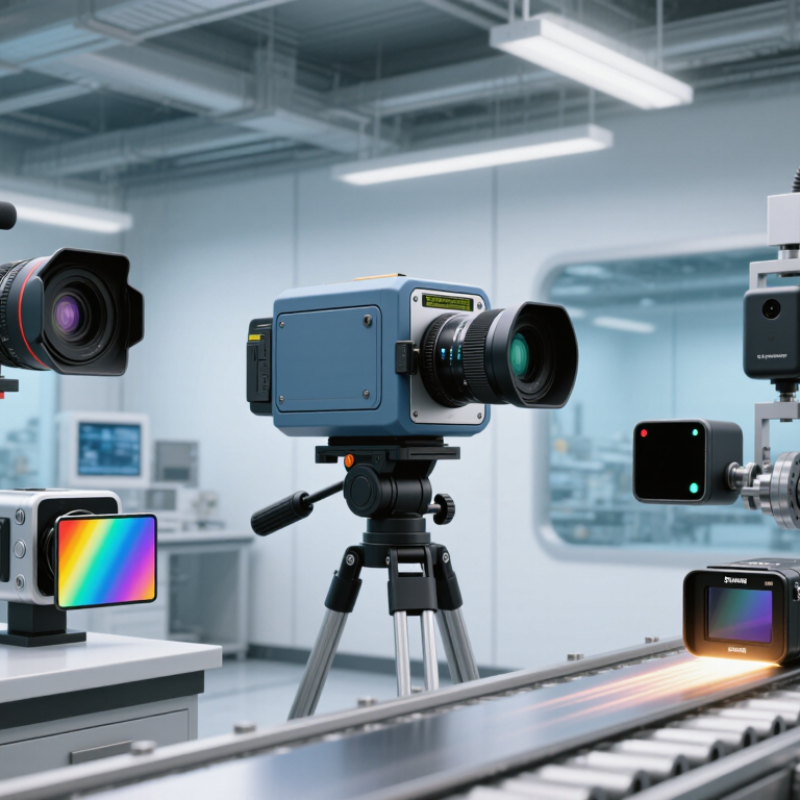
Industrial Digital Camera technology is changing quickly across factories, laboratories, logistics centers, and outdoor inspection sites. In 2026, buyers will face more than a simple choice between color and monochrome. Area-scan, line-scan, 3D, hyperspectral, high-speed, and smart cameras each solve different problems. The right choice depends on motion, lighting, resolution, processing needs, and operating conditions.

David Dechow, a respected machine-vision consultant and educator, describes the field clearly: “Machine vision is the technology and methods used to provide imaging-based automatic inspection and analysis.” His point remains practical. A camera is not valuable because it has the highest pixel count. It is valuable when it produces reliable measurements under real production pressure. A line-scan camera may inspect a moving steel coil continuously. A 3D camera can reveal the height of a misplaced component. A smart camera can process images beside the conveyor, reducing network delays.

Small details matter.

This guide compares the leading Industrial Digital Camera types expected to shape 2026. It considers sensor design, frame rate, dynamic range, connectivity, software compatibility, and maintenance demands. It also examines where each camera performs well, and where it may disappoint. No ranking is perfect. A technically advanced camera can still fail beside vibration, glare, dust, or unstable lighting. That limitation deserves attention. By combining industry experience, manufacturer specifications, and practical selection criteria, the discussion aims to support more dependable purchasing decisions.

What Are the Top Industrial Digital Camera Types in 2026?

Area-Scan Cameras: 100+ MP Sensors for 2D Machine-Vision Inspection

For 2D machine-vision inspection in 2026, area-scan cameras with 100+ MP sensors bring fine detail into a single frame. They can reveal pinholes, edge chips, coating gaps, and tiny surface marks. This matters when products move quickly or when several features must align in one image. In line assessments, I look beyond pixel count. Lens quality, lighting uniformity, and mechanical stability often decide whether resolution becomes useful information. More pixels do not automatically mean better inspection. That lesson is easy to forget.

A 100+ MP sensor needs careful optics and a rigid mounting system. Small vibration can soften defects across a large image. Telecentric lenses may reduce geometric distortion, especially when measuring flat parts. Diffuse lighting helps control glare, while angled light can expose scratches and raised edges. Exposure time must match conveyor speed. Otherwise, motion blur can hide the very defect the camera was chosen to find. The image was enormous. The result was not always reliable.

High-resolution files also increase processing, storage, and network demands. Engineers should test the complete path, from trigger timing to inspection software and data retention. Calibration targets provide a practical check for scale accuracy and uneven illumination. In my view, acceptance testing should use real production samples, including clean parts, borderline defects, and occasional imperfect images. A camera may perform beautifully in a laboratory, yet struggle beside heat, dust, or changing light. That gap deserves honest review before deployment.

Line-Scan Cameras: 100k+ Lines/s for Continuous-Web Inspection

Line-scan cameras are becoming essential for inspecting materials that move continuously. Their strength is speed. Advanced systems can exceed 100,000 lines per second, capturing narrow slices of paper, film, glass, metal, or textiles without stopping production. At 10-micrometer resolution, 100,000 lines per second represents approximately one meter of web movement per second.

This capability supports detailed defect detection on high-speed production lines. The 2024 MarketsandMarkets Machine Vision report projects strong growth in industrial vision through 2029, driven by automation and quality-control demand. Line-scan adoption follows this trend, especially where area-scan cameras may create motion blur. Not always.

Reliable performance requires more than a fast sensor. An encoder must synchronize image capture with web movement. Stable lighting should reveal scratches, pinholes, stains, and coating changes. The EMVA 1288 measurement framework helps engineers compare sensitivity, noise, and dynamic range under controlled conditions. These measurements are useful, but factory results can differ.

A camera rated above 100k lines per second may still fail during vibration, uneven illumination, or unstable web tension. I have seen impressive specifications lose value when the image-processing pipeline cannot handle the data stream. Engineers should test the complete system, including optics, lighting, acquisition hardware, and inspection software. Speed matters. Data discipline matters more.

What Are the Top Industrial Digital Camera Types in 2026?

Line-Scan Cameras: 100k+ Lines/s for Continuous-Web Inspection

The chart shows the required camera line rate for continuous-web inspection at a constant 0.1 mm travel resolution. Line rate is calculated as web speed ÷ line pitch; therefore, a 10 m/s web speed requires 100,000 lines/s, while faster production lines require proportionally higher rates.

3D Cameras: 50Gb/s CoaXPress 2.0 for High-Throughput Depth Imaging

3D Cameras: 50Gb/s CoaXPress 2.0 for High-Throughput Depth Imaging

In 2026, industrial 3D cameras are becoming vital for fast inspection, robot guidance, and dimensional measurement. A 50Gb/s CoaXPress 2.0 connection can move dense depth data with limited delay. This matters when a camera captures moving parts, surface profiles, or multiple views per second. Four high-speed links may deliver the full bandwidth, depending on the camera and capture hardware. Cable quality, connector condition, and system layout still affect real performance. More bandwidth is not automatically better.

In practical installations, engineers should match camera resolution, frame rate, exposure time, and interface capacity before selecting equipment. A high-speed line cannot repair poor lighting or unstable calibration. Depth noise may appear around reflective metal, dark rubber, or transparent surfaces. Testing sample parts under real factory lighting is essential. Small timing errors can also create false edges during motion. That detail is easy to miss.

Tips: Keep cables short where possible, and separate data lines from strong electrical interference. Confirm that the frame grabber supports the required lane configuration. Record temperature, vibration, and lighting changes during trials. Leave processing headroom for filtering and measurement software. A system running at full capacity may work in the laboratory, but fail during peak production. Review the design after testing; the first configuration is rarely perfect.

SWIR Cameras: 0.9–1.7μm Detection for Silicon and Moisture Inspection

What Are the Top Industrial Digital Camera Types in 2026?

SWIR cameras detect light from 0.9 to 1.7μm, beyond standard silicon sensors. Silicon usually loses useful sensitivity near 1.1μm. This extended range reveals wafer patterns, organic contamination, and moisture that visible cameras may miss. The 2024 World Semiconductor Trade Statistics forecast valued global chip sales at about $611 billion. That scale increases pressure for faster, more reliable inspection. SWIR supports this demand by exposing defects through selected materials, not simply making images brighter.

Moisture produces strong absorption near 1.45μm, making SWIR useful for drying checks, coating inspection, and sealed-package testing. In practical trials, a wet patch can appear as a dark region on an otherwise uniform surface. However, reflections, surface texture, and temperature can create similar contrast. A neat specification can still mislead. The IDTechEx 2024 report on SWIR imaging also highlights sensitivity, cooling, and detector cost as major adoption factors. These issues matter on high-speed production lines.

High-Speed Cameras: 1,000+ fps for Fast-Motion Industrial Analysis

High-speed cameras recording above 1,000 frames per second reveal failures that ordinary inspection cameras miss. A cracked seal, vibrating blade, or misaligned actuator may exist for only milliseconds. The International Federation of Robotics reported 541,302 industrial robots installed worldwide in 2023. That expanding automation base increases demand for precise motion analysis.

Speed alone is not enough. Exposure time, lighting, lens choice, and trigger accuracy determine whether each frame is useful. The MarketsandMarkets High-Speed Camera Market report projects roughly 10% annual growth through the late 2020s. Engineers commonly select 1,000 to 5,000 fps for conveyor faults, while higher rates suit impact testing and fluid breakup. Light is everything. At short exposures, insufficient illumination creates noisy, underexposed images. Large onboard memory also matters when events cannot be predicted. In plant trials, a delayed trigger can waste an entire test, even with an advanced camera. I have seen teams overvalue frame rate and undervalue synchronization. That decision deserves review. The camera should connect with sensors, motion controllers, and safe test procedures. According to the EMVA 1288 measurement standard, image quality must be evaluated through measurable factors such as sensitivity, noise, and dynamic range, not marketing claims. A practical setup records the moving part, a time reference, and enough background detail to explain the failure.

What Are the Top Industrial Digital Camera Types in 2026? - High-Speed Cameras: 1,000+ fps for Fast-Motion Industrial Analysis

Industrial Camera Type Typical Maximum Frame Rate Typical Resolution at High Speed Shutter Technology Typical Exposure Time Data Interface or Recording Method Best-Fit Industrial Applications Main Technical Advantage
Standard CMOS High-Speed Camera 1,000–10,000 fps 1–4 megapixels, depending on frame rate Global shutter is common Approximately 1 µs to 1 ms Internal high-speed memory; Gigabit Ethernet, 10GbE, CoaXPress, or similar output on selected systems Assembly-line inspection, robotics, material testing, drop tests, and general motion analysis Balanced combination of frame rate, image quality, triggering, and system cost
Ultra-High-Speed CMOS Camera 10,000–100,000+ fps Typically 256 × 256 to 1,024 × 1,024 pixels at the highest speeds Global shutter or specialized high-speed sensor readout Approximately 0.1–100 µs Large internal memory with later data download; external trigger and synchronization inputs High-speed impact testing, combustion studies, fracture analysis, fluid jets, and explosive-event research Captures events that occur too quickly for conventional industrial cameras
High-Resolution High-Speed Camera 1,000–5,000 fps 4–12 megapixels at reduced or moderate frame rates Global shutter preferred for moving targets Approximately 2 µs to 1 ms High-bandwidth recording system, PCIe, CoaXPress, or onboard memory Dimensional analysis, large-part testing, aerospace structures, tire testing, and detailed deformation measurement Preserves more spatial detail while still recording fast motion
Compact Embedded High-Speed Camera 1,000–20,000 fps Approximately 0.3–2 megapixels Global shutter CMOS Approximately 1–500 µs Gigabit Ethernet, USB 3.x, MIPI, or onboard storage, depending on the embedded design Robot-mounted inspection, restricted installation spaces, laboratory automation, and machine troubleshooting Small size, lower power consumption, and easier integration into existing equipment
High-Speed Machine-Vision Camera 1,000–3,000 fps Approximately 1–5 megapixels Global shutter CMOS Approximately 5 µs to 1 ms CoaXPress, Camera Link, or 10GigE for continuous transfer to an industrial computer Quality control, print and packaging inspection, conveyor monitoring, and fast pick-and-place systems Supports repeatable triggering, deterministic timing, and automated pass/fail decisions
Intensified High-Speed Camera 1,000–100,000+ fps Commonly 0.1–2 megapixels Global shutter with an image intensifier or gated optical stage Approximately 1 ns to 1 ms Internal memory, synchronized trigger input, and specialized high-speed data output Low-light combustion, plasma research, laser processing, spark-gap observation, and transient optical events Improves sensitivity and permits extremely short exposure times in low-light conditions
High-Speed Stereo or Multi-Camera System 1,000–10,000 fps per camera Approximately 1–4 megapixels per camera Global shutter with hardware synchronization Approximately 1–500 µs Shared timing controller, synchronized recording memory, and 3D measurement software Three-dimensional deformation, crash testing, biomechanics, robotic motion, and complex part dynamics Combines high-speed recording with synchronized multi-angle or stereoscopic measurement
Typical technical ranges for industrial high-speed digital cameras available in 2026. Actual performance varies with sensor format, selected resolution, lighting, exposure, memory capacity, and recording mode.

Our dedicated sales and support staff are here to help you identify the ideal pump solution for your needs.

Contact Us