
Led Screen Rental has become a practical choice for concerts, exhibitions, product launches, and corporate events. It gives organizers bright, flexible visuals without requiring permanent installation. Yet a screen’s appearance tells only part of the story. Pixel pitch, refresh rate, cabinet weight, brightness, and control systems can shape the viewing experience and setup time.
Industry data helps explain the sector’s growth. Grand View Research estimated the global LED display market at approximately US$7.47 billion in 2023, with projected growth from 2024 to 2030. This figure covers LED displays broadly, not rental services alone, so it should not be treated as a rental-market estimate. Still, it points to rising demand for large-format visual systems. China is an important sourcing base, with companies serving domestic projects and international buyers. Supplier capabilities vary, though. A low quoted price may not include rigging support, spare modules, or on-site technicians.
This guide examines ten LED screen rental companies in China through practical criteria: product range, stated technical specifications, project experience, service coverage, and support arrangements. Those details matter when a display must fit a venue, arrive on schedule, and remain consistent across several panels. No ranking can replace a site inspection or a written technical proposal. Company information also changes, and published case studies may not reveal every limitation. Use the list as a starting point, then verify current specifications, references, and rental terms before choosing a supplier.
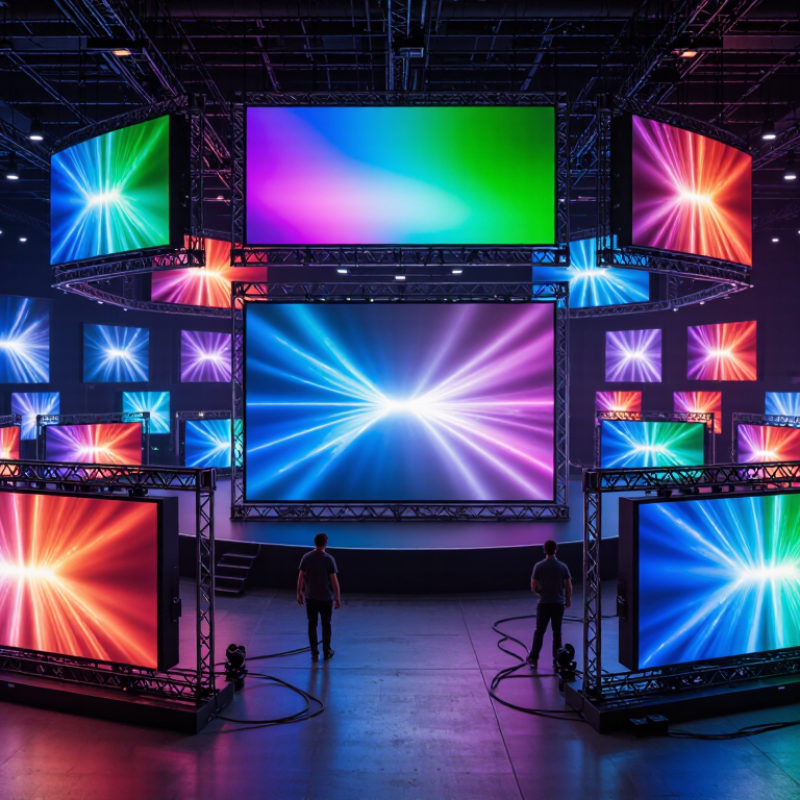
China’s LED rental market is shaped by concerts, exhibitions, conferences, and touring productions. The China Association of Performing Arts reported 2023 commercial performance box office revenue of about RMB 50.2 billion. That figure signals strong event activity, but it is not a direct measure of LED rental spending. Demand varies sharply between major cities and smaller venues.
For buyers, screen specifications matter as much as price. A close-viewing conference stage may need a finer pixel pitch, while an outdoor festival prioritizes brightness, weather protection, and quick assembly. Ask for cabinet weights, refresh-rate specifications, spare-panel ratios, and tested backup systems. Practical details matter. A delayed truck or missing power cable can disrupt an entire load-in.
Market comparisons also require care. Rental quotes may include transport, rigging, control equipment, technicians, and dismantling—or omit some of them. China’s 2023 performance figures describe a broad recovery, not guaranteed bookings for every supplier. Regional demand, seasonal schedules, and inventory quality can change the real cost. One weakness in many online comparisons is limited disclosure of these variables. Check the scope of each quote before comparing prices.
Evaluating an LED screen rental company starts with evidence, not a low day rate. AVIXA’s 2024 Industry Outlook and Trends Analysis forecasts global professional audiovisual revenue of US$325 billion by 2029. It projects a 5.5% compound annual growth rate. This is a market forecast, not a quality score. Still, it signals a crowded, expanding field, so compare measurable service details. Ask for the panel model, pixel pitch, resolution, brightness, refresh rate, and calibration records. Match pixel pitch to viewing distance; a 2.6 mm panel may suit a close indoor audience, while outdoor sunlight calls for higher brightness. Test it. Check camera footage for scan lines, color shifts, and uneven seams.
Reliability deserves equal weight. Request event references, a site survey, cable and power plans, delivery windows, and a named onsite technician. Confirm spare panels and receiving cards are available, and ask how quickly a failed module can be replaced. Compare quotes line by line: rigging, processors, control, transport, setup, strike, and overtime should be clear. Ask for a signal-flow drawing and a full-content test before doors open. Details matter. A polished demo cannot guarantee a smooth show; ask what went wrong at a recent event and how the team corrected it. That answer may reveal more than a brochure.
Use this 100-point evaluation framework to compare providers. The weightings are suggested assessment values, not verified scores or rankings of specific companies.
| No. | Evaluation Criterion | Suggested Weight | What to Check | Useful Evidence |
|---|---|---|---|---|
| 1 | Rental Inventory and Availability | 15 points | Whether the provider can supply the required screen area, pixel pitch, cabinet type, and quantity for the event dates. | Current inventory list, dated availability confirmation, and a written equipment schedule. |
| 2 | Display Specifications and Condition | 12 points | Suitability of resolution, brightness, refresh rate, viewing distance, and indoor or outdoor rating for the venue and content. | Product datasheets, cabinet inspection records, and a demonstration or test report where available. |
| 3 | Engineering and System Compatibility | 12 points | Ability to plan screen dimensions, signal flow, power distribution, processing, rigging interfaces, and content inputs. | Technical drawings, equipment list, signal-flow plan, and a documented review of event requirements. |
| 4 | Safety and Compliance | 12 points | How the provider addresses electrical safety, structural loading, weather exposure for outdoor use, and venue-specific rules. | Risk assessment, relevant equipment documentation, installation method statement, and required venue approvals. |
| 5 | Transport and Logistics | 10 points | Whether delivery, loading access, transport timing, packing, and equipment handling are planned for the location and schedule. | Delivery plan, proposed schedule, packing or dispatch list, and clearly stated transport arrangements. |
| 6 | Installation and Dismantling | 10 points | Whether the proposed crew size, installation sequence, testing time, and dismantling plan fit the event timetable. | Installation schedule, crew plan, site coordination details, and commissioning checklist. |
| 7 | On-Site Technical Support | 10 points | Availability of qualified technicians during setup and operation, plus a defined process for troubleshooting and replacement. | Support plan, named technical roles, escalation contacts, and stated response arrangements. |
| 8 | Customization and Content Support | 7 points | Ability to accommodate non-standard screen shapes, stage layouts, content resolutions, and playback or control requirements. | Layout proposal, supported input formats, processing plan, and written confirmation of custom requirements. |
| 9 | Quotation and Contract Clarity | 7 points | Whether the price, rental period, included services, exclusions, overtime terms, cancellation conditions, and damage responsibilities are clear. | Itemized quotation, service scope, rental terms, and a written list of any additional charges. |
| 10 | Relevant Project Experience and References | 5 points | Relevance of prior work to the event type, screen configuration, venue conditions, and production complexity being considered. | Project case studies, client references when available, and examples showing comparable technical setups. |
The ten anonymized profiles below reflect different strengths found among established LED screen rental providers in China. A touring-focused company may offer rugged cabinets, fast rigging, and spare panels for tight changeovers. A corporate-event specialist often supplies fine-pitch displays for clear text in hotel ballrooms. An outdoor-festival provider may prioritize high brightness, weather-resistant connections, and sturdy ground support. A broadcast-focused team typically pays close attention to refresh performance and camera testing. Details matter.
A fifth provider may serve small venues with lightweight panels and compact control systems. A sixth may specialize in large outdoor screens, where viewing distance and sunlight shape the design. A nationwide logistics operator can coordinate equipment across several cities, though delivery plans still need checking. Another company may build curved or irregular layouts for product launches and exhibitions. Not every setup fits.
A regional rental firm may offer responsive local crews and flexible inventory for shorter events. A technical-services provider may stand out through on-site testing, signal planning, and clear troubleshooting procedures. These are service profiles, not a verified ranking; capabilities vary by project and location. Before booking, request a recent equipment list, pixel-pitch details, backup-panel arrangements, and a written load-in schedule. One thing is easy to overlook: the screen itself is only part of the job. Teams also need time to test playback, connections, and sightlines in the actual venue.
Comparing the top LED screen rental companies in China requires more than checking screen size or daily rates. Look at each provider’s service scope: design support, delivery, installation, on-site operation, and dismantling. Ask what equipment comes with the rental, including processors, cables, spare modules, and backup power options. For a small indoor stage, fine pixel pitch can keep text crisp at close range. Outdoor events may need higher brightness and suitable weather protection. Details matter.
Tips: Request a sample equipment list and a site-specific plan. Confirm who handles setup, how quickly faulty modules can be replaced, and whether a technician stays during the event. A low quote may exclude these services.
Geographic coverage affects both cost and reliability. A company with local crews near the venue may reduce transport time and simplify last-minute support. For events across several cities, check whether the same equipment standards and service team can be maintained at each stop. Ask about delivery windows, venue access, and backup stock in the relevant region. A comparison table helps, but it can still hide important differences; I would verify every promise in writing.
Choosing an LED screen rental provider means checking more than pixel pitch. Match the screen’s resolution to the audience’s viewing distance and the content format. A screen viewed from a few metres needs different specifications from one across a large outdoor stage. Ask for brightness figures and a recent test image, not just a peak rating. Small details matter. Look for even color across panels, clean cable connections, and a refresh rate suitable for camera use. A spec sheet can still flatter a product, so request a demonstration when the event allows it.
Confirm what the rental includes: delivery, installation, signal testing, an on-site technician, and dismantling. For outdoor events, discuss rain protection, wind exposure, and backup panels before signing. Ask how quickly replacement equipment can reach the venue if a module fails. Check that the supplier has handled similar screen sizes and venue constraints, such as low loading doors or limited rigging points. Get the quote broken down by equipment, labor, transport, and overtime. Then read the service terms carefully. No checklist removes every risk. Even experienced teams can miss a detail, so agree on a test schedule and a named contact for event day. The cheapest offer may work, but only if its crew and support match the actual setup.
We are here to help you with all your queries and concerns, just write to us using the below form and we will get back to you as soon as we can.