
In the competitive food industry, the demand for rice noodles is rapidly increasing. Many global buyers seek efficient and reliable solutions for their production needs. A sophisticated Rice Noodle Production Line can streamline operations and enhance product quality. However, selecting the right equipment can be challenging.
Different options offer various features and capabilities. It's crucial to understand the market demands before making a purchase. Buyers must consider factors like production capacity, technology, and after-sales support. Understanding the nuances in machinery can also lead to improved efficiency and reduced downtime.
Investing in a Rice Noodle Production Line is a significant decision. It requires thorough research and expert advice. Potential buyers should evaluate their specific needs. A tailored approach can help in making the right choice, ensuring successful operations and customer satisfaction in the long run.
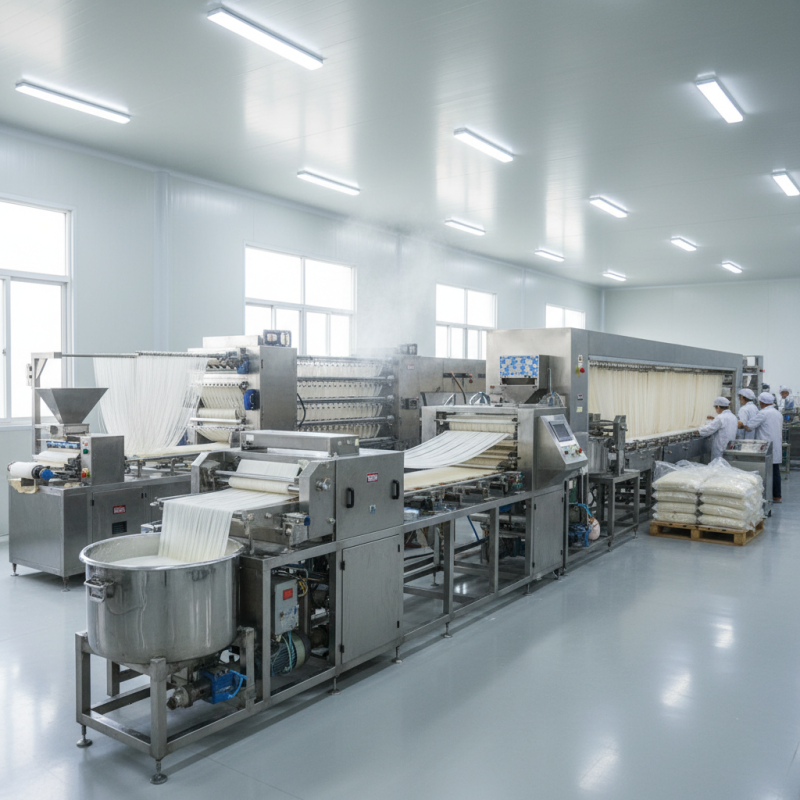
Rice noodle production lines have gained significant attention in the global market. These lines cater to a growing demand for rice noodles, especially in Asian cuisine. An overview reveals various types of production lines that offer different capabilities. They differ in automation levels, output capacities, and specific processes. Some lines focus on traditional methods, while others employ advanced technology.
One key aspect is the efficiency of these lines. A well-designed production line can enhance productivity. Features such as fast drying processes and precise cutting mechanisms are vital. However, it's essential to understand that not all lines meet the same standards. Some might struggle with consistency in noodle quality. Buyers need to carefully assess these factors before making a decision.
Additionally, the choice of materials impacts production. High-quality rice is crucial for the final product. Some lines may not accommodate different rice types, limiting versatility. This can affect marketability. Understanding the specific needs of the local market is also essential. It may be beneficial to reflect on the long-term maintenance and support required for these production lines.
When selecting rice noodle machinery, several key features become vital for production efficiency. The capacity of the machinery plays a significant role. Many modern machines can produce up to 2000 kg of rice noodles per hour. This output is crucial for meeting global demand, especially in regions where rice noodles are a staple.
Another important aspect is the automation level of the machinery. Machines with advanced automation reduce labor costs and enhance consistency. Reports indicate that automated lines can improve productivity by 30% compared to manual operations. Efficiency not only saves time but also minimizes the chances of human error, a common issue in traditional setups.
Temperature control is essential in noodle production. The cooking process must be precise to achieve the right texture. Many machines incorporate digital temperature control systems. Delays or inaccuracies in this step can lead to undesirable noodle qualities. Professional insights emphasize the necessity of having such features to maintain product integrity and meet the expectations of discerning consumers.
The rice noodle production industry has seen substantial advancements in technology. Manufacturers worldwide have invested in state-of-the-art production lines. According to a recent industry report, the market for rice noodle production equipment is projected to reach $1 billion by 2025. This growth reflects the rising global demand for rice noodles, particularly in Asian markets.
Leading manufacturers of rice noodle production lines focus on efficiency and quality. They incorporate automation to enhance production speed while ensuring consistent noodle texture and flavor. Reports indicate that automated systems can increase production rates by 25% compared to traditional methods. However, not all manufacturers offer the same reliability; some have faced challenges with equipment durability and maintenance requirements.
Sustainability is becoming a significant focus in production line technologies. Many producers are adopting eco-friendly materials and processes to reduce waste. As industry players strive for innovation, the need for thorough research becomes paramount. Buyers should evaluate manufacturers based on their technological advancements, customer support, and market reputation. Selecting the right production line can impact profitability and product quality, making informed decisions essential for long-term success.
When analyzing production line efficiency for rice noodles, one must consider various factors. Speed and consistency are paramount. Efficient production lines can lead to reduced costs and improved output. However, it is essential to evaluate the flexibility of each line. A line that can quickly adapt to new recipes or sizes is valuable.
The technology employed in a production line greatly impacts its efficiency. Automated processes help reduce human error and increase production speed. Yet, reliance solely on automation can lead to oversights. Training staff to identify issues becomes crucial. Lines that balance technology with human oversight often show better performance.
Environmental concerns also play a role in production efficiency. Energy-efficient machinery reduces costs and environmental impact. However, the initial investment can be high. Global buyers face the challenge of weighing immediate expenses against long-term benefits. Sharing experiences among buyers can lead to better-informed decisions and improved practices in rice noodle production.
When considering a rice noodle production line, investment and cost are critical factors for global buyers. The average cost of a medium-sized production line ranges from $150,000 to $500,000. This figure can vary widely based on equipment quality and production capacity. It's essential to assess long-term returns versus initial outlays.
Moreover, operating expenses should not be overlooked. A recent report suggested that energy costs could account for up to 30% of total operational expenses. Additionally, labor costs differ significantly by region. A country with lower labor costs may seem appealing. Yet, workforce reliability and skills are equally crucial.
Buyers also need to consider the maintenance of machinery. Poor maintenance may lead to production shutdowns. These disruptions can severely impact profitability. While investing in high-quality equipment can be expensive, it often pays off in efficiency. Striking a balance between initial investment and ongoing costs is essential.
We are here to help you with all your queries and concerns, just write to us using the below form and we will get back to you as soon as we can.