Choosing quality pumps for global sourcing requires more than comparing prices, flow rates, and delivery dates. Buyers must understand the complete operating environment. Fluid viscosity, temperature, pressure, corrosion risk, power supply, and maintenance skills can change the correct choice. A pump that performs well in Germany may struggle in a dusty mining site or a humid coastal plant.
Pump consultant and author Dr. Lev Nelik has emphasized, “A pump should be selected for the system, not for the catalog.” That principle remains practical. Quality pumps should match the application, not merely display impressive specifications. Request performance curves, material certificates, efficiency data, factory test records, and clear warranty terms. Check whether the supplier can provide replacement seals, bearings, impellers, and technical support near the destination market. Small details matter. A missing spare seal can stop production for days.
Supplier audits also reveal useful evidence. Examine machining quality, assembly procedures, inspection records, and final testing. Speak with previous customers when possible. Their experience may expose problems hidden in polished brochures. Still, no sourcing method is perfect. A complete document package does not guarantee flawless field performance. Product selection can also become too conservative, increasing cost without improving reliability. The strongest decision balances engineering evidence, local service capacity, lifecycle cost, and honest risk assessment. Quality pumps are not simply purchased; they are verified against real operating conditions.
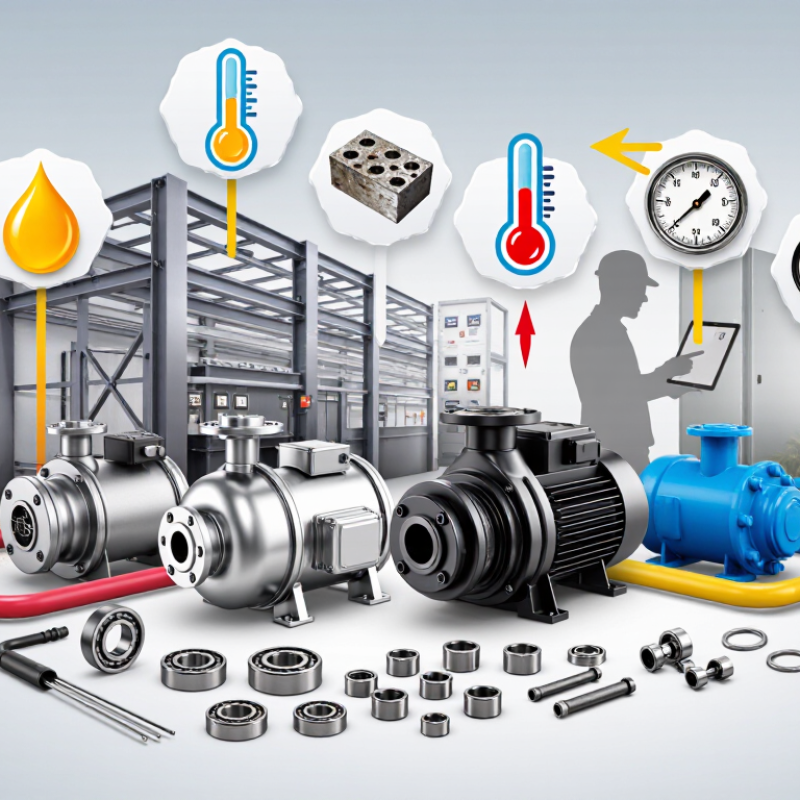
Global sourcing should begin with a duty definition, not a catalog search. Record required flow, total dynamic head, fluid viscosity, temperature, solids, operating hours, and power conditions. Include startup frequency and seasonal changes. These details expose hidden risks.
Pump efficiency therefore affects both operating cost and emissions.
Build a complete operating envelope before requesting quotations. Define minimum, normal, and maximum flow rates, then check the pump curve across those points. Calculate available NPSH using suction losses, fluid temperature, and vapor pressure. Do not rely on a generic safety margin.
Specify performance verification under ISO 9906, including flow, head, efficiency, and power measurements. A spreadsheet can look precise and still be wrong.
Your sourcing document should state materials, seal design, bearing arrangement, motor requirements, noise limits, and acceptance criteria. Request test records linked to the exact serial unit, not a similar model. Confirm compatibility with local voltage, frequency, installation standards, and spare-part availability.
Field reviews often reveal mismatched assumptions, especially around viscosity and suction piping. A perfect-looking selection can still fail.
Early estimates are rarely exact, so document uncertainties and revisit them after site measurements.
Choosing a pump begins with the process, not the catalog. Centrifugal pumps suit clean, low-viscosity liquids and steady, high-flow duties. Positive displacement pumps perform better with thick fluids, dosing, and variable pressure. Diaphragm pumps handle solids and aggressive chemicals, while peristaltic pumps protect sensitive fluids through gentle, tube-based movement. The U.S. Department of Energy states that optimized pumping systems can reduce energy consumption by 20% to 30%. That makes efficiency a sourcing requirement, not a bonus.
In global sourcing, compare the duty point, materials, seal design, motor efficiency, and service access. Stainless steel may resist corrosion, but it is not automatically suitable for every chemical. A pump rated for water can fail quickly with solvents or abrasive slurry.
The Hydraulic Institute recommends evaluating pumps near their best efficiency point, because operation far from that point increases vibration, heat, and maintenance risk. In practice, a slightly oversized pump often looks safe. It can waste energy through throttling. This is an easy mistake to make.
Tips:
Request certified performance curves and factory test records. Check flow and head at actual operating conditions. Ask about spare seals, bearings, and delivery times. Confirm electrical standards before ordering. Leave margin for real process changes, but avoid excessive capacity. I would also review noise, cleaning access, and installation space; these details are often missed during price comparisons. DOE pumping-system guidance and Hydraulic Institute standards provide useful technical checks, but local commissioning data should still challenge the original selection.
How to Choose Quality Pumps for Global Sourcing?
Evaluate materials, efficiency, and performance specifications before comparing purchase prices. The U.S. Department of Energy reports that pumping systems consume nearly 25% of industrial electricity. A small efficiency gap can become a large operating cost over several years. Start with the actual duty point: flow rate, total head, liquid temperature, viscosity, and operating hours. A pump selected only by maximum flow may run far from its best efficiency point.
Material choice must match the fluid and installation environment. Stainless steel can resist corrosion, while cast iron may suit less aggressive water applications. Confirm shaft, seal, impeller, and casing materials separately. Do not accept “high quality” as a specification. Ask for chemical compatibility data, hardness details, and documented testing.
Performance data needs independent verification. ISO 9906 defines acceptance tests for rotodynamic pump performance, including flow, head, and efficiency. The U.S. DOE also indicates that optimized pumping systems may reduce energy use by 20% to 50%. That range is useful, but it is not guaranteed. Real results depend on controls, piping, valves, and maintenance. Request certified curves, test tolerances, motor efficiency data, and noise levels. Field experience suggests that missing test conditions often hide the biggest risk. A cheaper pump can become expensive when its curve is unclear.
| Pump Type | Typical Fluid | Common Wetted Materials | Typical Flow Range | Typical Head or Pressure | Typical Efficiency | Recommended Quality Checks |
|---|---|---|---|---|---|---|
| End-Suction Centrifugal | Clean water, light industrial liquids | Cast iron, stainless steel, bronze; carbon-ceramic or silicon-carbide seal faces | 5–500 m³/h | 10–100 m | 55–85% | Hydraulic performance test, shaft alignment, impeller balance, mechanical-seal leakage, motor efficiency |
| Multistage Centrifugal | Boiler feedwater, pressure boosting, clean process water | Stainless steel, cast iron, engineered polymers; tungsten-carbide or silicon-carbide wear components | 1–100 m³/h | 30–250 m | 60–85% | Stage pressure consistency, vibration level, NPSH verification, seal durability, pressure test of casing |
| Submersible Sewage | Wastewater, sewage, fluids containing solids | Cast iron, stainless steel, nitrile or elastomer seals; hardened or abrasion-resistant impeller options | 5–300 m³/h | 5–80 m | 40–75% | Solids-passage verification, insulation resistance, water-ingress test, cable-gland sealing, thermal protection |
| Progressive Cavity | Sludge, viscous liquids, fluids with suspended solids | Carbon or stainless steel rotor, nitrile/EPDM/FKM stator, stainless steel casing | 0.1–250 m³/h | Up to approximately 60 bar | 50–80% | Dry-run protection, stator elastomer compatibility, rotor surface finish, torque monitoring, flow-rate stability |
| Diaphragm Metering | Water-treatment chemicals, acids, alkalis, dosing fluids | PTFE, PVC, PVDF, polypropylene, ceramic or alloy wetted parts selected for chemical compatibility | 0.001–10 m³/h | Up to approximately 20 bar | 30–70% overall; high dosing accuracy is the primary criterion | Flow-rate calibration, pulsation measurement, diaphragm fatigue test, back-pressure operation, chemical compatibility review |
| Rotary Screw | Fuel oil, lubricating oil, polymers, high-viscosity liquids | Carbon steel, stainless steel, hardened alloy steel, PTFE or elastomer seals | 0.5–500 m³/h | Up to approximately 100 bar | 60–85% | Viscosity-based performance test, relief-valve setting, rotor clearance, noise and vibration measurement, seal compatibility |
| Evaluation Dimension | Preferred Specification or Evidence | Why It Matters |
|---|---|---|
| Material Selection | Material certificates, corrosion allowance, elastomer compatibility data, and documented hardness where abrasion is expected | Reduces corrosion, premature wear, contamination, and unplanned downtime |
| Energy Efficiency | Certified pump curve, efficiency at the required duty point, motor efficiency class, and variable-speed compatibility | Lowers total cost of ownership and prevents oversizing |
| Performance Verification | Factory test report covering flow, head or pressure, power input, vibration, leakage, and rotation direction | Confirms that delivered equipment matches the purchase specification |
| Mechanical Reliability | Balanced rotating parts, suitable bearings, replaceable wear components, guarded coupling, and defined seal service life | Improves operating life and simplifies maintenance |
| International Readiness | Applicable electrical and pressure-equipment documentation, multilingual manuals, export packaging, and metric/imperial interface confirmation | Reduces installation, customs, compliance, and after-sales risks across markets |
Choosing a quality pump for global sourcing starts with the supplier, not the quotation. A low price means little if the factory cannot control materials, machining, assembly, and testing. Ask for evidence. Review production capacity, equipment lists, technician experience, and recent orders with similar flow rates and pressures. A capable supplier should explain its process clearly, including how it handles sudden design changes or urgent replacement parts.
Certifications deserve careful checking. Request current copies of quality management certificates, product test reports, and material documents. Confirm the certificate holder, validity period, factory address, and covered product range.
A certificate alone can mislead. Contact the issuing organization when details look inconsistent. For regulated markets, verify applicable electrical, safety, environmental, and import requirements before placing an order. Requirements can differ by destination.
Quality control should be visible on the factory floor. Look for incoming material inspection, dimensional checks, pressure testing, vibration monitoring, and final performance records. Ask whether each pump receives a traceable serial number and inspection file. Review how defects are recorded and corrected, not just how many inspections are completed.
A supplier that hides small failures may create larger risks later. Video audits help, but an independent inspection is more reliable for the first shipment. Do not guess. I would also test packaging, spare parts, manuals, and labeling, because a technically sound pump can still fail during transport or installation. One practical weakness remains: supplier documents may be accurate today but outdated next year, so schedule periodic reviews.
A low pump price can hide expensive decisions. During supplier reviews, I compare the quotation with freight, import duties, installation, energy use, and spare parts. A pump that costs 8% less may consume more electricity every month. That difference becomes significant in a continuous-duty facility.
Logistics deserve practical testing. I ask how the pump will be packed, labeled, and protected against moisture. A wooden crate, shock indicators, and clear lifting points can prevent avoidable damage. Delivery terms must identify responsibility for insurance, customs documents, and unloading. I also check lead times for mechanical seals, bearings, and motor components. Delays often begin with one missing replacement part. Small details matter.
Warranty language should state coverage, exclusions, inspection procedures, and response deadlines. Ask whether remote troubleshooting is available and whether local technicians can visit the site. Request service records from comparable installations, not only polished testimonials. In my experience, written response times are more useful than general promises. Still, this method is not perfect. Forecasting repair costs remains difficult when water quality, operator habits, and duty cycles change. I once underestimated training needs because the equipment looked simple. That mistake increased commissioning time. A reliable sourcing decision therefore includes operator training, technical drawings, spare-part lists, and a realistic after-sales contact process. Fast help matters. Cost is more than price.
How to Choose Quality Pumps for Global Sourcing?
This planning scenario estimates the first-year landed cost of one standardized industrial pump purchased internationally. Purchase price is only one part of the total cost; freight, import duty, installation, warranty provision, and after-sales support should also be assessed before supplier selection.
We are here to help you with all your queries and concerns, just write to us using the below form and we will get back to you as soon as we can.